

Join Our Newsletter To Be Informed When New Videos Are Posted
Hebrew Text
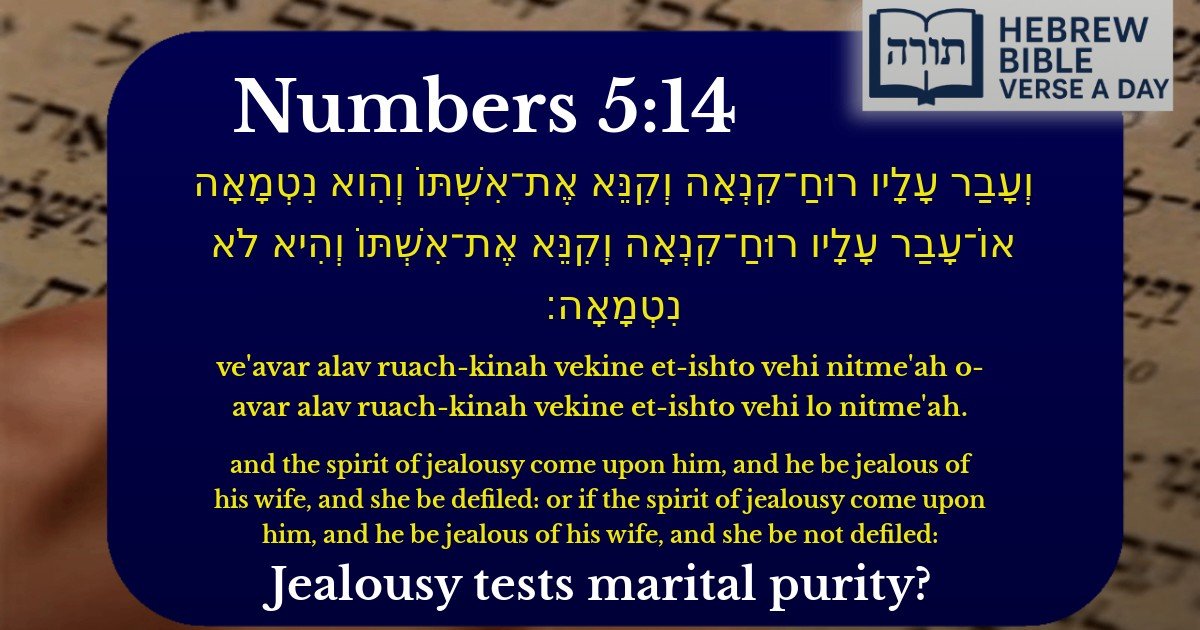
וְעָבַר עָלָיו רוּחַ־קִנְאָה וְקִנֵּא אֶת־אִשְׁתּוֹ וְהִוא נִטְמָאָה אוֹ־עָבַר עָלָיו רוּחַ־קִנְאָה וְקִנֵּא אֶת־אִשְׁתּוֹ וְהִיא לֹא נִטְמָאָה׃
English Translation
and the spirit of jealousy come upon him, and he be jealous of his wife, and she be defiled: or if the spirit of jealousy come upon him, and he be jealous of his wife, and she be not defiled:
Transliteration
Ve'avar alav ruach-kinah vekine et-ishto vehi nitme'ah o-avar alav ruach-kinah vekine et-ishto vehi lo nitme'ah.
Hebrew Leining Text
וְעָבַ֨ר עָלָ֧יו רֽוּחַ־קִנְאָ֛ה וְקִנֵּ֥א אֶת־אִשְׁתּ֖וֹ וְהִ֣וא נִטְמָ֑אָה אוֹ־עָבַ֨ר עָלָ֤יו רֽוּחַ־קִנְאָה֙ וְקִנֵּ֣א אֶת־אִשְׁתּ֔וֹ וְהִ֖יא לֹ֥א נִטְמָֽאָה׃
🎵 Listen to leining
Parasha Commentary
📚 Talmud Citations
This verse is quoted in the Talmud.
📖 Sotah 3a
The verse is discussed in the context of the laws concerning a husband's suspicion of his wife's infidelity and the procedure of the Sotah (the suspected adulteress).
📖 Sotah 5a
The verse is referenced in a discussion about the nature of jealousy and its implications in the Sotah ritual.
Context in the Torah
This verse appears in Bamidbar (Numbers) 5:14, within the passage detailing the laws of the Sotah—a woman suspected of adultery due to her husband's jealousy. The Torah outlines a unique ritual conducted by the Kohen to determine her innocence or guilt.
The Nature of "Ruach Kinah" (Spirit of Jealousy)
Rashi explains that "ruach kinah" refers to a genuine suspicion that arises in the husband's mind, not mere baseless jealousy. The Talmud (Sotah 2b) elaborates that this suspicion is often Divinely inspired (ruach hakodesh) to bring hidden sins to light.
Two Possible Scenarios
The Role of the Sotah Ritual
The Midrash Tanchuma (Naso 5) teaches that this procedure serves both to clear the innocent and punish the guilty, restoring peace to the household. The miraculous nature of the ritual—where the guilty suffer and the innocent are blessed—demonstrates Hashem's direct involvement in marital sanctity.
Halachic Implications
The Shulchan Aruch (Even HaEzer 178) rules that a husband may not subject his wife to this ordeal out of mere whim; there must be legitimate grounds for suspicion. The Ramban adds that the entire process is a chok (Divine decree) beyond full human comprehension.