

Join Our Newsletter To Be Informed When New Videos Are Posted
Hebrew Text
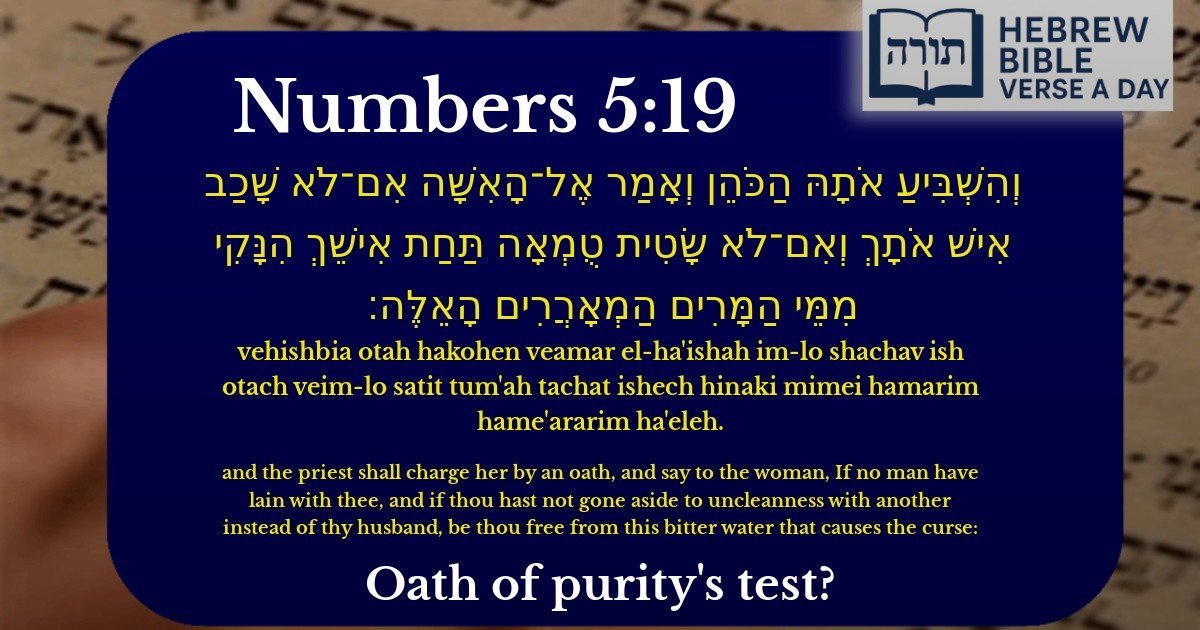
וְהִשְׁבִּיעַ אֹתָהּ הַכֹּהֵן וְאָמַר אֶל־הָאִשָּׁה אִם־לֹא שָׁכַב אִישׁ אֹתָךְ וְאִם־לֹא שָׂטִית טֻמְאָה תַּחַת אִישֵׁךְ הִנָּקִי מִמֵּי הַמָּרִים הַמְאָרֲרִים הָאֵלֶּה׃
English Translation
and the priest shall charge her by an oath, and say to the woman, If no man have lain with thee, and if thou hast not gone aside to uncleanness with another instead of thy husband, be thou free from this bitter water that causes the curse:
Transliteration
Vehishbia otah hakohen veamar el-ha'ishah im-lo shachav ish otach veim-lo satit tum'ah tachat ishech hinaki mimei hamarim hame'ararim ha'eleh.
Hebrew Leining Text
וְהִשְׁבִּ֨יעַ אֹתָ֜הּ הַכֹּהֵ֗ן וְאָמַ֤ר אֶל־הָֽאִשָּׁה֙ אִם־לֹ֨א שָׁכַ֥ב אִישׁ֙ אֹתָ֔ךְ וְאִם־לֹ֥א שָׂטִ֛ית טֻמְאָ֖ה תַּ֣חַת אִישֵׁ֑ךְ הִנָּקִ֕י מִמֵּ֛י הַמָּרִ֥ים הַֽמְאָרְרִ֖ים הָאֵֽלֶּה׃
🎵 Listen to leining
Parasha Commentary
📚 Talmud Citations
This verse is quoted in the Talmud.
📖 Sotah 7a
The verse is discussed in the context of the Sotah ritual, where a woman suspected of adultery undergoes a trial by bitter water. The Talmud analyzes the priest's oath and the conditions under which the woman is declared innocent or guilty.
📖 Sotah 20a
Further discussion on the implications of the priest's words and the nature of the oath administered to the woman, including the consequences of her innocence or guilt.
The Sotah Ritual and Its Significance
The verse describes part of the sotah ritual (Numbers 5:11-31), where a woman suspected of adultery (sotah) undergoes a trial by bitter waters administered by the Kohen. This procedure is unique in Torah law, as it involves a supernatural revelation of truth through Divine intervention.
Rashi's Explanation of the Oath
Rashi (Bamidbar 5:19) explains that the Kohen administers an oath to the woman, invoking the sacred name of Hashem, to emphasize the gravity of the situation. The phrase "הִנָּקִי מִמֵּי הַמָּרִים" ("be thou free from this bitter water") implies that if she is innocent, the waters will not harm her, but if guilty, they will bring a curse.
The Rambam's Legal Perspective
Rambam (Hilchot Sotah 1:1-2) discusses the precise legal conditions for administering the sotah ritual, emphasizing that it only applies when there are witnesses to the husband's warning (kinui) and the wife's subsequent seclusion (setirah) with the suspected man. The oath serves as both a test and a deterrent.
Midrashic Insights
The Midrash (Bamidbar Rabbah 9:9) notes that the phrase "תַּחַת אִישֵׁךְ" ("instead of thy husband") hints at the severity of the sin—it is not merely adultery but a betrayal of the marital covenant. The bitter waters symbolize the bitterness of sin, while their miraculous effect demonstrates Hashem's direct involvement in justice.
Talmudic Elaboration
The Talmud (Sotah 7a) analyzes the Kohen's wording carefully:
Spiritual Dimensions
Kli Yakar (Bamidbar 5:19) observes that the oath's structure mirrors the spiritual stakes: just as the waters test her physical fidelity, they also probe her spiritual integrity. The public nature of the ritual (Sotah 7b) underscores Judaism's rejection of private sin, affirming that moral accountability is central to covenantal life.