Frequently Asked Questions
Q: What is the 'bitter water' mentioned in Numbers 5:24?
A: The 'bitter water' (מֵי הַמָּרִים) is part of the Sotah ritual described in the Torah (Numbers 5:11-31). It was a special test administered by the Kohen (priest) to a woman suspected of adultery (sotah) when there were no witnesses. The water contained dust from the Mishkan floor and dissolved ink from a parchment with Torah verses. According to Rashi and the Talmud (Sotah 20a), if the woman was guilty, the water would cause a supernatural reaction; if innocent, she would be blessed.
Q: Why was the water called 'bitter' in this verse?
A: The water was called 'bitter' (מָרִים) for two reasons: 1) It literally had a bitter taste due to its ingredients (Talmud Sotah 20a). 2) Metaphorically, it represented the bitter consequences of violating marital trust, as explained by Rambam (Hilchot Sotah 3:17). The Midrash (Bamidbar Rabbah 9:9) also connects it to the 'bitter' strife caused by jealousy in a marriage.
Q: Does the Sotah ritual with bitter water still apply today?
A: No, the Sotah ritual is not practiced today. The Talmud (Sotah 47a) states that it ceased when adultery became widespread, as the miracle would not occur for unworthy generations. Rambam (Hilchot Sotah 4:19) adds that the Sanhedrin discontinued it before the Temple's destruction. However, the moral lessons about marital fidelity remain eternally relevant.
Q: What is the significance of the curse in this verse?
A: The 'curse' (הַמְאָרֲרִים) refers to the divine judgment that would affect a guilty woman, as the Torah details physical consequences (Numbers 5:27). Rashi explains that the curse was activated by the erased Name of Hashem in the water, showing that violating sacred vows (like marriage) profanes Hashem's holiness. The Talmud (Sotah 7b) teaches that this underscores the gravity of trust in Jewish family life.
Q: What lesson can we learn from the Sotah ritual today?
A: The Sotah teaches: 1) The sanctity of marriage—Hashem cares deeply about fidelity (Rambam, Hilchot Ishut 1:1). 2) The power of truth—the ritual publicly clarified innocence or guilt (Talmud Sotah 2a). 3) Divine justice—miracles occurred to protect the innocent (Midrash Tanchuma Naso 6). Today, we apply these values by strengthening trust in relationships and appreciating Hashem's oversight in our lives.

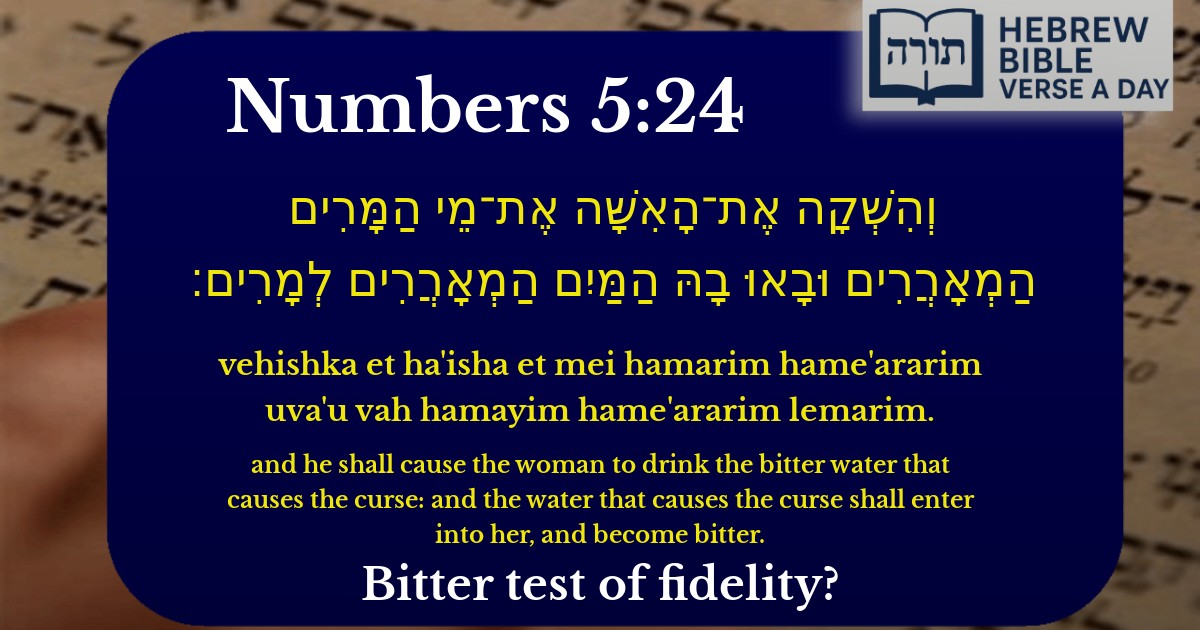

The Sotah Ritual: Bitter Waters of Testing
The verse describes the procedure of the sotah (suspected adulteress) as outlined in Bamidbar (Numbers) 5:24. This ritual involves a woman suspected of infidelity drinking "bitter waters" (mei hamarim hame'ararim) to determine her guilt or innocence.
Rashi's Explanation
Rashi (on Bamidbar 5:24) explains that the term hame'ararim ("that causes the curse") refers to the Divine Name being erased into the waters, which brings about the curse if the woman is guilty. The waters become "bitter" (lemarim) in her body as a form of divine judgment.
Mishnah and Talmudic Insights
Symbolism of the Bitter Waters
The Midrash (Bamidbar Rabbah 9:14) explains that the bitterness corresponds to the bitter consequences of sin. Just as the waters test the woman's innocence, they also serve as a purification process when she is found innocent.
Halachic Context
The Shulchan Aruch (Even HaEzer 178:1) notes that the sotah ritual was discontinued after the destruction of the Second Temple, as the Sanhedrin no longer functions. However, its lessons about marital fidelity and divine justice remain eternally relevant.