

Join Our Newsletter To Be Informed When New Videos Are Posted
Hebrew Text
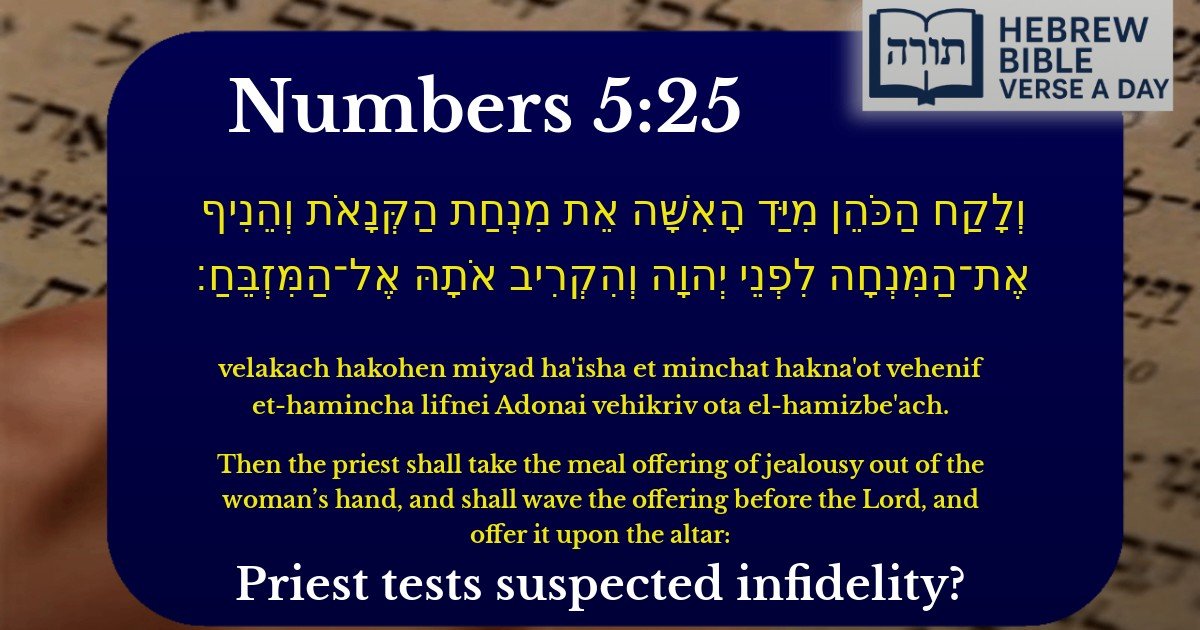
וְלָקַח הַכֹּהֵן מִיַּד הָאִשָּׁה אֵת מִנְחַת הַקְּנָאֹת וְהֵנִיף אֶת־הַמִּנְחָה לִפְנֵי יְהוָה וְהִקְרִיב אֹתָהּ אֶל־הַמִּזְבֵּחַ׃
English Translation
Then the priest shall take the meal offering of jealousy out of the woman’s hand, and shall wave the offering before the Lord, and offer it upon the altar:
Transliteration
Velakach hakohen miyad ha'isha et minchat hakna'ot vehenif et-hamincha lifnei Adonai vehikriv ota el-hamizbe'ach.
Hebrew Leining Text
וְלָקַ֤ח הַכֹּהֵן֙ מִיַּ֣ד הָֽאִשָּׁ֔ה אֵ֖ת מִנְחַ֣ת הַקְּנָאֹ֑ת וְהֵנִ֤יף אֶת־הַמִּנְחָה֙ לִפְנֵ֣י יְהֹוָ֔ה וְהִקְרִ֥יב אֹתָ֖הּ אֶל־הַמִּזְבֵּֽחַ׃
🎵 Listen to leining
Parasha Commentary
📚 Talmud Citations
This verse is quoted in the Talmud.
📖 Sotah 18a
The verse is discussed in the context of the laws concerning the sotah (a woman suspected of adultery) and the ritual involving the meal offering of jealousy.
📖 Sotah 19b
The verse is referenced in a discussion about the procedures and significance of the waving of the offering before the Lord.
Context of the Verse
This verse (Numbers 5:25) is part of the parashah of Sotah, which details the procedure for a woman suspected of adultery (sotah). The passage describes the priestly ritual involving a meal offering (minchat kena'ot, "the meal offering of jealousy") brought by the husband who suspects his wife of infidelity. The offering consists of barley flour without oil or frankincense, symbolizing the seriousness of the accusation and the potential consequences.
Explanation of the Ritual
Rashi (on Numbers 5:15) explains that the priest takes the offering from the woman's hand to emphasize her active participation in the process. The waving (tenufah) before Hashem signifies presenting the offering to the Divine court for judgment. Rambam (Hilchot Sotah 3:14) notes that this ritual is unique because it involves a meal offering brought under circumstances of suspicion rather than voluntary devotion.
Symbolism of the Offering
The Waving (Tenufah)
The Mishnah (Menachot 5:6) describes the waving motion as moving the offering forward and backward, up and down, symbolizing that all existence is under Hashem's dominion. The Kli Yakar (Numbers 5:25) adds that this act demonstrates that the truth of the matter is entirely in Hashem's hands, and He will reveal whether the woman is innocent or guilty.
Offering Upon the Altar
The Torat Kohanim (Sifrei Bamidbar 18) explains that only a handful of the offering is burned on the altar, while the remainder is given to the priests. This teaches that even in a situation of severe accusation, there is still a dimension of sanctity, as the offering is partly consumed by the holy fire of the altar.