

Join Our Newsletter To Be Informed When New Videos Are Posted
Hebrew Text
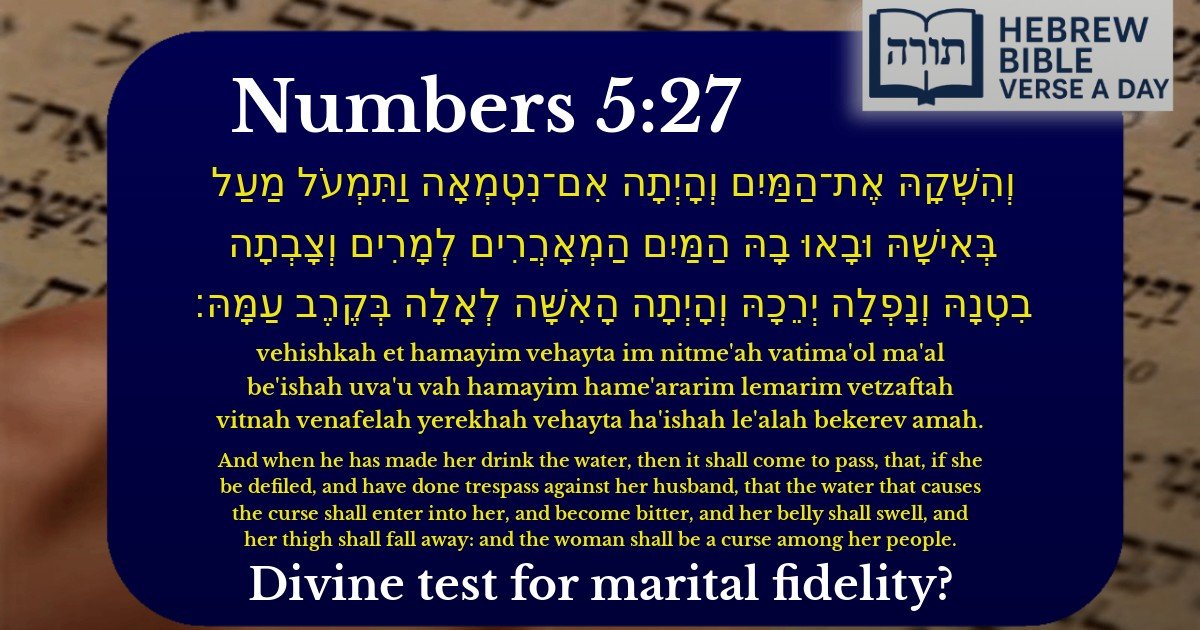
וְהִשְׁקָהּ אֶת־הַמַּיִם וְהָיְתָה אִם־נִטְמְאָה וַתִּמְעֹל מַעַל בְּאִישָׁהּ וּבָאוּ בָהּ הַמַּיִם הַמְאָרֲרִים לְמָרִים וְצָבְתָה בִטְנָהּ וְנָפְלָה יְרֵכָהּ וְהָיְתָה הָאִשָּׁה לְאָלָה בְּקֶרֶב עַמָּהּ׃
English Translation
And when he has made her drink the water, then it shall come to pass, that, if she be defiled, and have done trespass against her husband, that the water that causes the curse shall enter into her, and become bitter, and her belly shall swell, and her thigh shall fall away: and the woman shall be a curse among her people.
Transliteration
Vehishkah et hamayim vehayta im nitme'ah vatima'ol ma'al be'ishah uva'u vah hamayim hame'ararim lemarim vetzaftah vitnah venafelah yerekhah vehayta ha'ishah le'alah bekerev amah.
Hebrew Leining Text
וְהִשְׁקָ֣הּ אֶת־הַמַּ֗יִם וְהָיְתָ֣ה אִֽם־נִטְמְאָה֮ וַתִּמְעֹ֣ל מַ֣עַל בְּאִישָׁהּ֒ וּבָ֨אוּ בָ֜הּ הַמַּ֤יִם הַמְאָֽרְרִים֙ לְמָרִ֔ים וְצָבְתָ֣ה בִטְנָ֔הּ וְנָפְלָ֖ה יְרֵכָ֑הּ וְהָיְתָ֧ה הָאִשָּׁ֛ה לְאָלָ֖ה בְּקֶ֥רֶב עַמָּֽהּ׃
🎵 Listen to leining
Parasha Commentary
📚 Talmud Citations
This verse is quoted in the Talmud.
📖 Sotah 20a
The verse is discussed in the context of the Sotah ritual, where a woman suspected of adultery is made to drink bitter waters to determine her guilt or innocence.
📖 Sotah 26b
The verse is referenced in a discussion about the effects of the bitter waters and the consequences for the woman if she is guilty.
📖 Yoma 75a
The verse is mentioned in a broader discussion about divine justice and the consequences of sin.
The Sotah Ritual in Jewish Law
This verse describes the procedure of the sotah (suspected adulteress) as outlined in Bamidbar (Numbers) 5:11-31. The Torah prescribes a unique ritual to determine whether a woman who secluded herself with another man against her husband's warnings was guilty of adultery. The process involves drinking "bitter waters" (mei hame'rarim) prepared with dust from the Tabernacle floor and dissolved text of a sacred oath.
Rashi's Explanation
Rashi (on Numbers 5:27) explains that the phrase "her belly shall swell" refers to a supernatural physical reaction that would occur if she was guilty. The "falling of the thigh" is understood by Rashi as a euphemism for the collapse of her reproductive organs, rendering her infertile. This aligns with the Talmud's discussion in Sotah 20a which describes how the waters would affect her reproductive system if guilty.
Maimonides' Perspective
Rambam (Maimonides) in Mishneh Torah, Hilchot Sotah 3:17 emphasizes that this entire procedure was a miraculous test that would only work during the time when the Divine Presence rested in the Tabernacle or Temple. He notes that the waters would have no effect on an innocent woman, even if she had other sins.
Symbolism of the Ritual
Halachic Context
The Talmud (Sotah 2a) teaches that this procedure was only enacted when there were no witnesses to the alleged act, and only when the husband had warned his wife against seclusion with a particular man. The Shulchan Aruch (Even HaEzer 178) notes that the sotah ritual is no longer practiced after the destruction of the Temple, as it required the presence of the Divine Presence in the Holy Temple.
Moral Lessons
The Midrash (Bamidbar Rabbah 9:46) derives from this passage the importance of maintaining marital fidelity and the severe consequences of violating sacred relationships. The public nature of becoming "a curse among her people" serves as a deterrent against secret sins, teaching that ultimately all actions are known before God.