

Join Our Newsletter To Be Informed When New Videos Are Posted
Hebrew Text
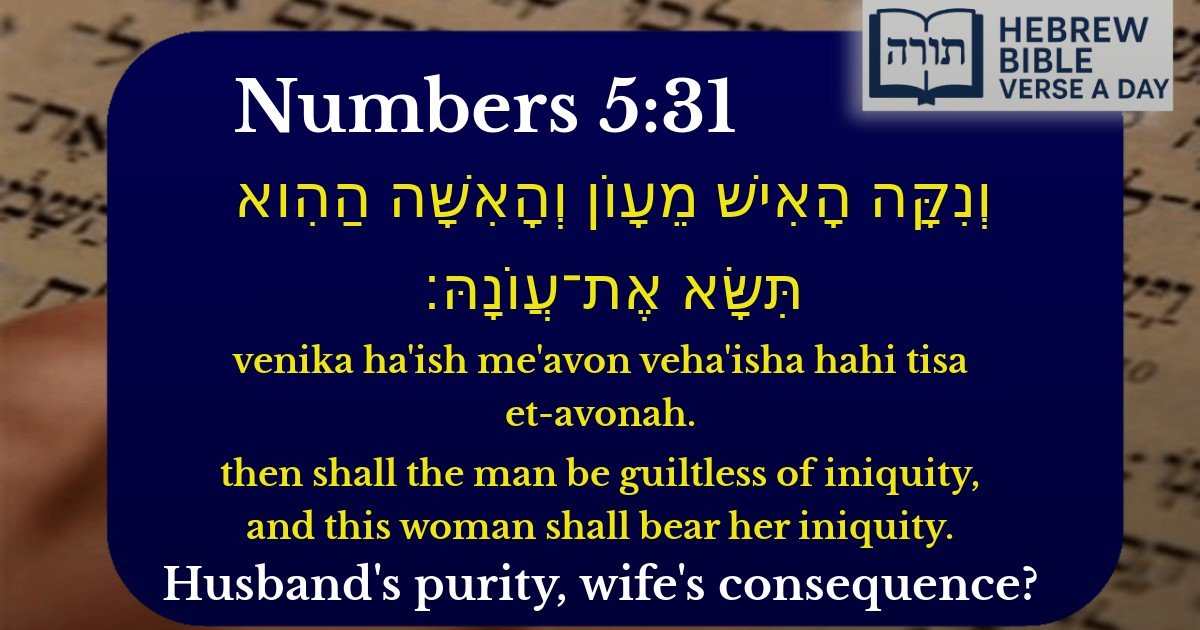
וְנִקָּה הָאִישׁ מֵעָוֺן וְהָאִשָּׁה הַהִוא תִּשָּׂא אֶת־עֲוֺנָהּ׃
English Translation
then shall the man be guiltless of iniquity, and this woman shall bear her iniquity.
Transliteration
Venika ha'ish me'avon veha'isha hahi tisa et-avonah.
Hebrew Leining Text
וְנִקָּ֥ה הָאִ֖ישׁ מֵעָוֺ֑ן וְהָאִשָּׁ֣ה הַהִ֔וא תִּשָּׂ֖א אֶת־עֲוֺנָֽהּ׃ {פ}
🎵 Listen to leining
Parasha Commentary
📚 Talmud Citations
This verse is quoted in the Talmud.
📖 Sotah 28a
The verse is discussed in the context of the laws concerning a woman suspected of adultery (Sotah), where it is cited to explain the consequences for the woman and the innocence of the man if she is found guilty.
Context of the Verse
This verse (Numbers 5:31) appears in the Torah portion discussing the sotah (a woman suspected of adultery) and the ritual of the bitter waters (mei hamarim). The verse concludes the procedure, stating that if the woman is guilty, she will bear the consequences of her sin, while the husband is absolved of any wrongdoing in bringing her to trial.
Rashi's Explanation
Rashi (Rabbi Shlomo Yitzchaki) comments that the phrase "וְנִקָּה הָאִישׁ מֵעָוֺן" ("the man shall be guiltless of iniquity") means the husband is cleared from any sin in this matter, provided he had no prior knowledge of his wife's misconduct. If he did know and still brought her to trial, he would not be innocent. Rashi emphasizes that the husband must be completely free of suspicion himself.
Rambam's Perspective
In Mishneh Torah (Hilchot Sotah 1:1-2), the Rambam (Maimonides) explains that the sotah ritual is only applicable when the husband is entirely free of sin in marital matters. If the husband himself was unfaithful, the waters would not test his wife. This aligns with the principle that Divine justice does not operate in a case where the accuser is also guilty.
Talmudic Insights
The Talmud (Sotah 47b) discusses the conditions under which a husband may bring his wife to the sotah trial. It states that if the husband warned his wife in front of witnesses and she subsequently secluded herself with another man, the process may proceed. However, if the husband himself engaged in improper behavior, the ritual is invalidated, reinforcing the verse's implication of the husband's innocence.
Midrashic Interpretation
The Midrash Tanchuma (Naso 6) elaborates that the phrase "וְהָאִשָּׁה הַהִוא תִּשָּׂא אֶת־עֲוֺנָהּ" ("this woman shall bear her iniquity") teaches that the punishment is exact measure for measure. Just as she sinned in secret, her shame is revealed publicly. The Midrash also notes that if she repents sincerely, she may be spared the consequences, demonstrating Hashem's mercy even in judgment.
Halachic Implications