

Join Our Newsletter To Be Informed When New Videos Are Posted
Hebrew Text
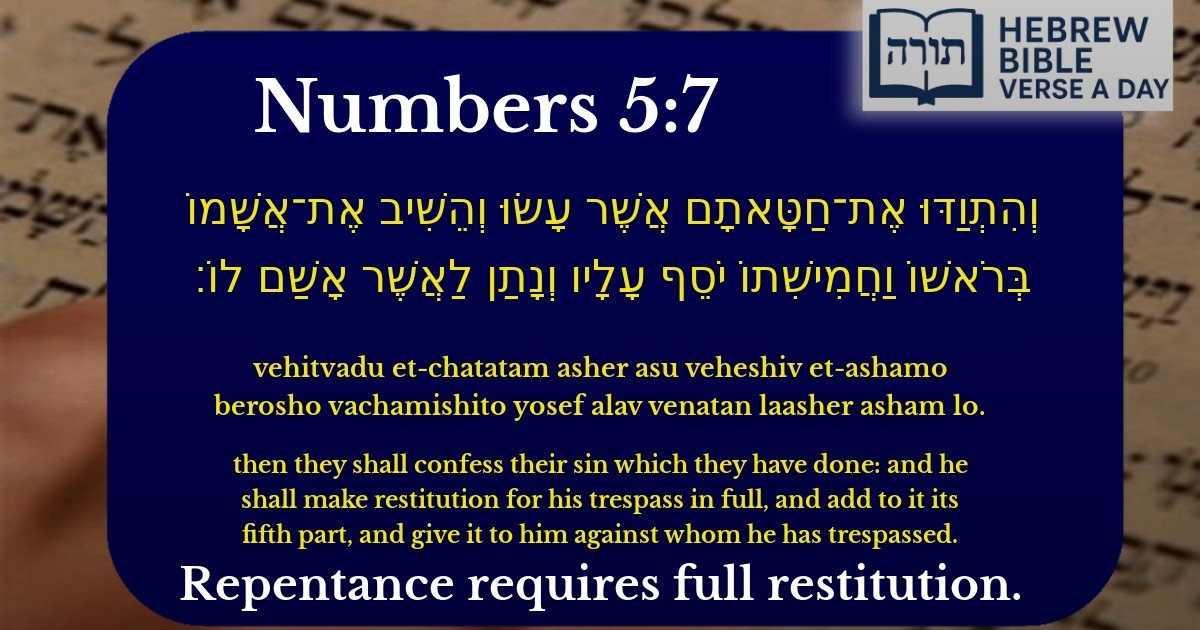
וְהִתְוַדּוּ אֶת־חַטָּאתָם אֲשֶׁר עָשׂוּ וְהֵשִׁיב אֶת־אֲשָׁמוֹ בְּרֹאשׁוֹ וַחֲמִישִׁתוֹ יֹסֵף עָלָיו וְנָתַן לַאֲשֶׁר אָשַׁם לוֹ׃
English Translation
then they shall confess their sin which they have done: and he shall make restitution for his trespass in full, and add to it its fifth part, and give it to him against whom he has trespassed.
Transliteration
Vehitvadu et-chatatam asher asu veheshiv et-ashamo berosho vachamishito yosef alav venatan laasher asham lo.
Hebrew Leining Text
וְהִתְוַדּ֗וּ אֶֽת־חַטָּאתָם֮ אֲשֶׁ֣ר עָשׂוּ֒ וְהֵשִׁ֤יב אֶת־אֲשָׁמוֹ֙ בְּרֹאשׁ֔וֹ וַחֲמִישִׁת֖וֹ יֹסֵ֣ף עָלָ֑יו וְנָתַ֕ן לַאֲשֶׁ֖ר אָשַׁ֥ם לֽוֹ׃
🎵 Listen to leining
Parasha Commentary
📚 Talmud Citations
This verse is quoted in the Talmud.
📖 Yoma 86b
The verse is discussed in the context of the laws of repentance and restitution, particularly regarding the requirement to confess one's sins and make restitution.
📖 Bava Kamma 104b
The verse is referenced in the discussion of the laws of restitution, emphasizing the requirement to add a fifth part when making restitution for a trespass.
Confession and Restitution in Jewish Law
The verse (Numbers 5:7) outlines the process of repentance for one who has committed a financial transgression. According to Rashi, this passage teaches that verbal confession (vidui) is an essential component of repentance, even after the offender has made financial restitution. The Rambam (Hilchot Teshuva 1:1) codifies this as one of the fundamental steps of repentance.
The Requirement to Add a Fifth
The Torah mandates that the offender must repay the principal amount plus an additional fifth (20%). The Talmud (Bava Kamma 54b) explains that this penalty applies to the principal amount, meaning one calculates 20% of the original sum and adds it to the repayment. For example, if one stole 100 units, they must repay 120 units (100 + 20).
To Whom the Payment is Made
The verse states "and give it to him against whom he has trespassed." The Sifrei emphasizes that the payment must go directly to the victim, not to their heirs if the victim has passed away. However, if the victim cannot be located, the payment plus the fifth must be given to the Kohanim (Priests), as derived from the continuation of the passage in Numbers 5:8.
Spiritual Dimensions of Restitution