
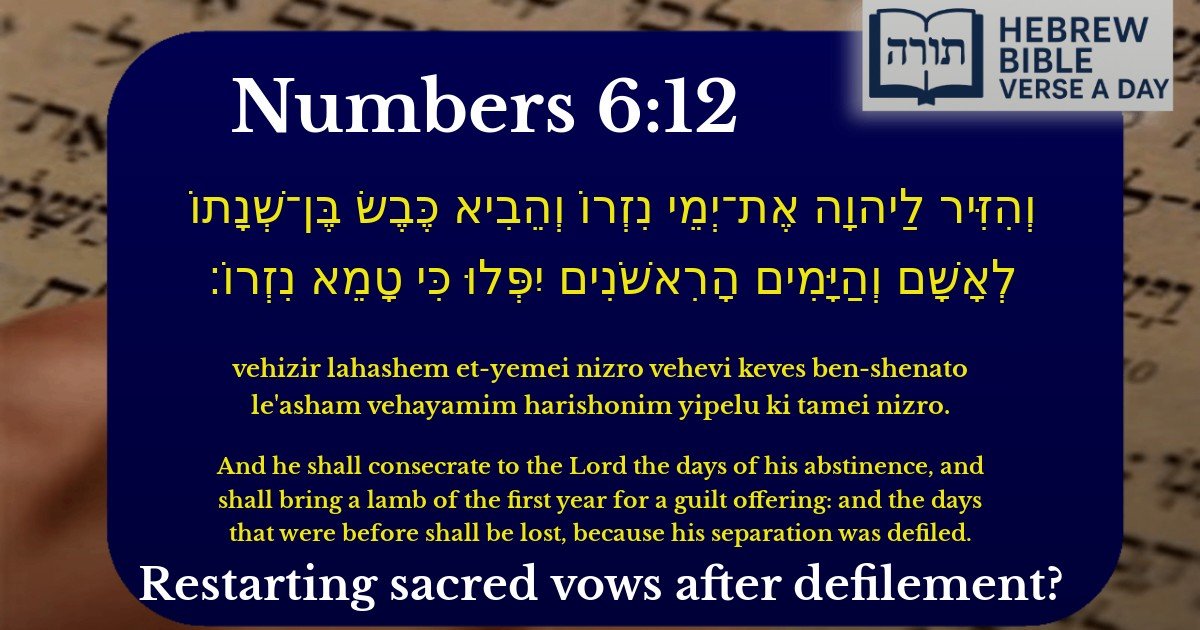

Numbers 6:12 - Restarting sacred vows after defilement?

Numbers 6:12 - במדבר 6:12

Hebrew Text

וְהִזִּיר לַיהוָה אֶת־יְמֵי נִזְרוֹ וְהֵבִיא כֶּבֶשׂ בֶּן־שְׁנָתוֹ לְאָשָׁם וְהַיָּמִים הָרִאשֹׁנִים יִפְּלוּ כִּי טָמֵא נִזְרוֹ׃

English Translation

And he shall consecrate to the Lord the days of his abstinence, and shall bring a lamb of the first year for a guilt offering: and the days that were before shall be lost, because his separation was defiled.

Transliteration

Vehizir lahashem et-yemei nizro vehevi keves ben-shenato le'asham vehayamim harishonim yipelu ki tamei nizro.

Hebrew Leining Text

וְהִזִּ֤יר לַֽיהֹוָה֙ אֶת־יְמֵ֣י נִזְר֔וֹ וְהֵבִ֛יא כֶּ֥בֶשׂ בֶּן־שְׁנָת֖וֹ לְאָשָׁ֑ם וְהַיָּמִ֤ים הָרִאשֹׁנִים֙ יִפְּל֔וּ כִּ֥י טָמֵ֖א נִזְרֽוֹ׃

🎵 Listen to leining

Parasha Commentary

Context of the Verse

This verse (Bamidbar 6:12) discusses the laws of a nazir (one who takes a vow of abstinence) who becomes ritually impure (tamei) during their period of nezirut. The Torah outlines the process of atonement and renewal of the nazirite vow after such impurity.

Explanation of the Verse

The verse states that the nazir must "consecrate to Hashem the days of his abstinence" anew after becoming impure. Rashi explains that this means the previous days of nezirut are nullified, and the nazir must start counting their term again from the beginning. The requirement to bring a keves ben shanato (a one-year-old lamb) as an asham (guilt offering) serves as atonement for the impurity incurred.

Key Halachic Principles

  • Nullification of Previous Days: As Rambam states in Hilchos Nezirus (2:15), all prior days of nezirut become invalid once impurity occurs, and the nazir must restart their count from day one.
  • The Guilt Offering: The asham offering, as explained by the Sifrei, serves to atone for the nazir's transgression of allowing themselves to become impure during their vow.
  • Restoration of Holiness: The Talmud (Nazir 19a) emphasizes that the renewal of the nezirut period reflects the seriousness of maintaining purity while under a sacred vow.

Midrashic Insight

The Midrash Tanchuma (Naso 10) connects this law to the broader concept of repentance (teshuvah). Just as the nazir must restart their count after impurity, a person who stumbles in their spiritual journey must recommit fully to their path of holiness.

📚 Talmud Citations

This verse is not quoted in the Talmud.

Frequently Asked Questions

Q: What does Numbers 6:12 mean in the context of a Nazirite vow?
A: Numbers 6:12 discusses what happens when a Nazirite (someone who took a special vow of dedication to Hashem) becomes ritually impure (tamei). The verse explains that if impurity occurs during the Nazirite period, the previous days of the vow do not count, and the person must bring a guilt offering (korban asham) and restart their vow from the beginning. Rashi explains that this teaches the seriousness of maintaining purity during a Nazirite vow.
Q: Why does a Nazirite have to bring a guilt offering (asham) if they become impure?
A: The guilt offering (asham) in Numbers 6:12 serves as atonement for the unintentional defilement of the Nazirite vow. The Rambam (Hilchot Nezirut 7:9) explains that even though the impurity may have been accidental, the offering is required because the Nazirite failed in their obligation to guard their sanctity. The Torah emphasizes the importance of maintaining holiness during the vow.
Q: What happens to the previous days of a Nazirite vow if they become impure?
A: Numbers 6:12 states that if a Nazirite becomes impure, the days they already observed before the impurity do not count ('the former days shall be lost'). The Talmud (Nazir 19a) explains that the person must restart their entire Nazirite period from day one after purification. This teaches that spiritual commitments require vigilance to maintain their sanctity.
Q: What kind of lamb is brought as the guilt offering in Numbers 6:12?
A: The verse specifies that the Nazirite must bring 'a lamb in its first year' (כֶּבֶשׂ בֶּן־שְׁנָתוֹ) as a guilt offering. Rashi notes that this is a young, unblemished sheep, emphasizing the importance of bringing a proper and meaningful sacrifice to atone for the interruption of the vow.
Q: How does the concept of restarting a Nazirite vow apply to spiritual commitments today?
A: While the Nazirite vow is not commonly practiced today, the principle in Numbers 6:12 teaches that spiritual growth requires consistency. If one stumbles in their commitment (such as in Torah study or mitzvah observance), they should not give up but rather renew their dedication. The Talmud (Berachot 5a) discusses repentance and returning to one's spiritual path with even greater strength.