

Join Our Newsletter To Be Informed When New Videos Are Posted
Hebrew Text
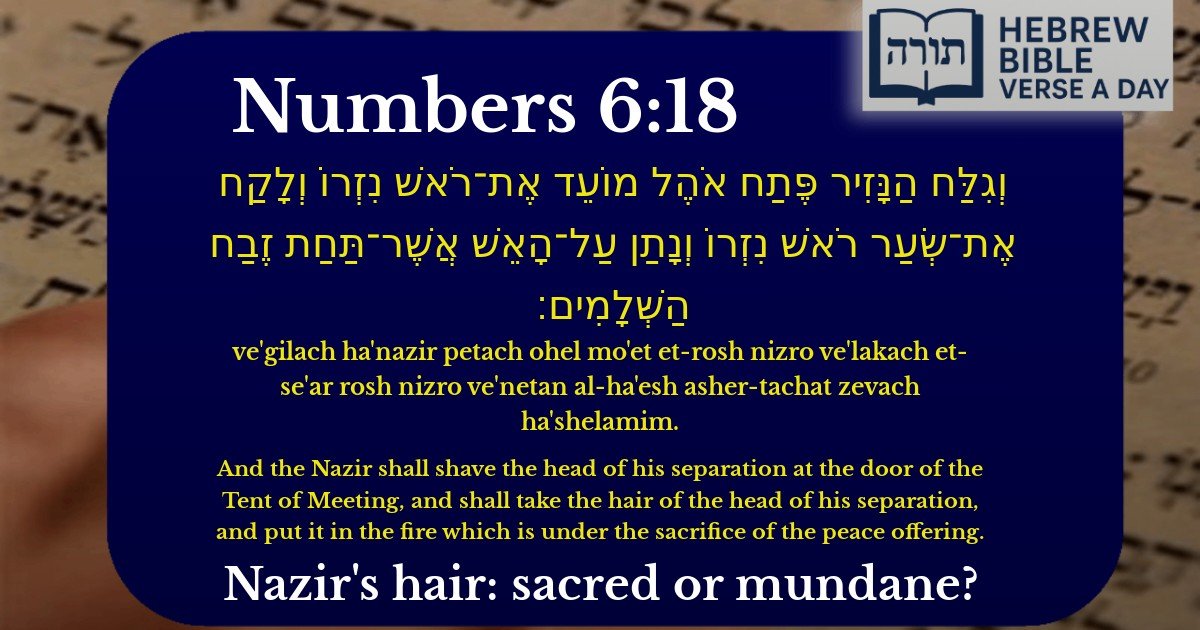
וְגִלַּח הַנָּזִיר פֶּתַח אֹהֶל מוֹעֵד אֶת־רֹאשׁ נִזְרוֹ וְלָקַח אֶת־שְׂעַר רֹאשׁ נִזְרוֹ וְנָתַן עַל־הָאֵשׁ אֲשֶׁר־תַּחַת זֶבַח הַשְּׁלָמִים׃
English Translation
And the Nazir shall shave the head of his separation at the door of the Tent of Meeting, and shall take the hair of the head of his separation, and put it in the fire which is under the sacrifice of the peace offering.
Transliteration
Ve'gilach ha'nazir petach ohel mo'et et-rosh nizro ve'lakach et-se'ar rosh nizro ve'netan al-ha'esh asher-tachat zevach ha'shelamim.
Hebrew Leining Text
וְגִלַּ֣ח הַנָּזִ֗יר פֶּ֛תַח אֹ֥הֶל מוֹעֵ֖ד אֶת־רֹ֣אשׁ נִזְר֑וֹ וְלָקַ֗ח אֶת־שְׂעַר֙ רֹ֣אשׁ נִזְר֔וֹ וְנָתַן֙ עַל־הָאֵ֔שׁ אֲשֶׁר־תַּ֖חַת זֶ֥בַח הַשְּׁלָמִֽים׃
🎵 Listen to leining
Parasha Commentary
📚 Talmud Citations
This verse is quoted in the Talmud.
📖 Nazir 45b
The verse is discussed in the context of the laws pertaining to the Nazirite's shaving of his hair and the proper place for this ritual.
📖 Sotah 16a
The verse is referenced in a discussion about the procedures for the Nazirite's offerings and the significance of the location where the hair is shaved.
The Nazir's Shaving Ceremony
The verse describes the final act of the Nazirite's vow, where he shaves his consecrated hair at the entrance of the Tent of Meeting. According to Rashi (Bamidbar 6:18), this act symbolizes the completion of his nazirite period, as the hair was a visible sign of his sanctity. The placement at the entrance of the Ohel Moed emphasizes that this is a sacred act performed in proximity to the Divine Presence.
Significance of Burning the Hair
The burning of the hair under the peace offering (zevach hashelamim) carries deep symbolism. Rambam (Hilchos Nezirus 8:13) explains that this act demonstrates that the hair was dedicated to Hashem, just as the sacrifice is offered to Him. The Midrash Tanchuma (Naso 15) adds that the fire consuming the hair parallels the spiritual elevation achieved through the nazirite's abstention.
Halachic Details
Spiritual Message
The Kli Yakar (Bamidbar 6:18) teaches that the nazir's hair represents worldly growth that must be sacrificed when returning to regular life. By placing it under the peace offering, we learn that true shalom (peace/completeness) comes when we subordinate our physicality to spiritual purpose. The Sforno adds that this act prevents the nazir from becoming arrogant about his period of elevated sanctity.