
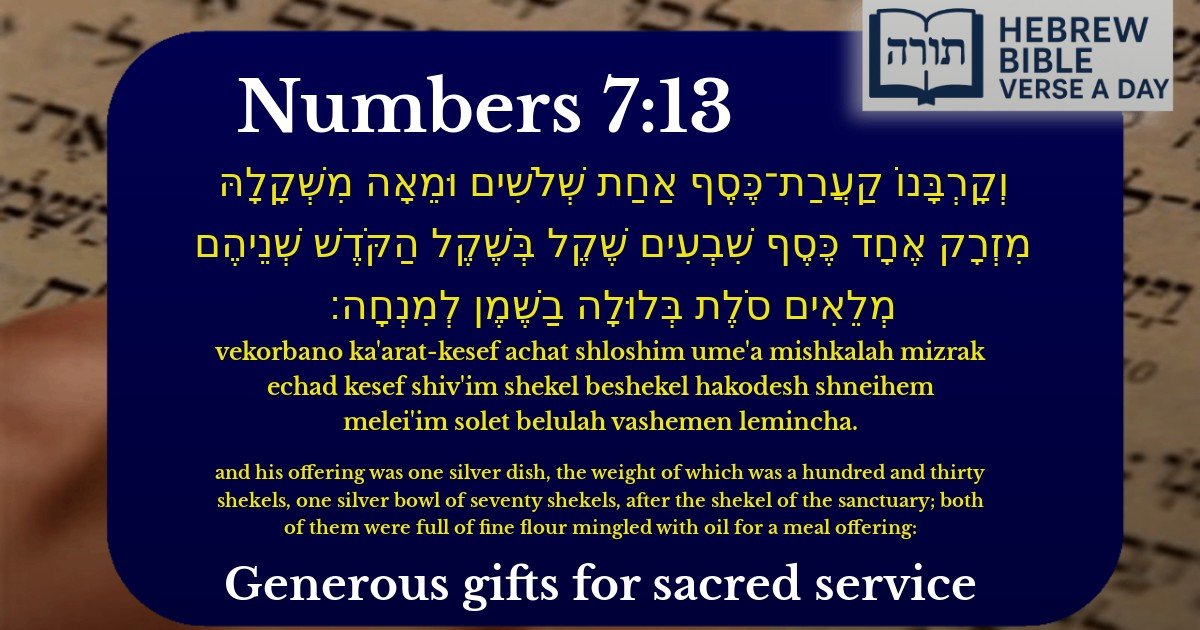

Numbers 7:13 - Generous gifts for sacred service

Numbers 7:13 - במדבר 7:13

Hebrew Text

וְקָרְבָּנוֹ קַעֲרַת־כֶּסֶף אַחַת שְׁלֹשִׁים וּמֵאָה מִשְׁקָלָהּ מִזְרָק אֶחָד כֶּסֶף שִׁבְעִים שֶׁקֶל בְּשֶׁקֶל הַקֹּדֶשׁ שְׁנֵיהֶם מְלֵאִים סֹלֶת בְּלוּלָה בַשֶּׁמֶן לְמִנְחָה׃

English Translation

and his offering was one silver dish, the weight of which was a hundred and thirty shekels, one silver bowl of seventy shekels, after the shekel of the sanctuary; both of them were full of fine flour mingled with oil for a meal offering:

Transliteration

Vekorbano ka'arat-kesef achat shloshim ume'a mishkalah mizrak echad kesef shiv'im shekel beshekel hakodesh shneihem melei'im solet belulah vashemen lemincha.

Hebrew Leining Text

וְקׇרְבָּנ֞וֹ קַֽעֲרַת־כֶּ֣סֶף אַחַ֗ת שְׁלֹשִׁ֣ים וּמֵאָה֮ מִשְׁקָלָהּ֒ מִזְרָ֤ק אֶחָד֙ כֶּ֔סֶף שִׁבְעִ֥ים שֶׁ֖קֶל בְּשֶׁ֣קֶל הַקֹּ֑דֶשׁ שְׁנֵיהֶ֣ם ׀ מְלֵאִ֗ים סֹ֛לֶת בְּלוּלָ֥ה בַשֶּׁ֖מֶן לְמִנְחָֽה׃

🎵 Listen to leining

Parasha Commentary

Context of the Verse

This verse (Numbers 7:13) describes the offering brought by Nachshon ben Aminadav, the prince of the tribe of Yehudah, during the dedication of the Mishkan (Tabernacle). The offering consisted of a silver dish (ka'arat kesef) and a silver bowl (mizrak kesef), both filled with fine flour mixed with oil for a meal offering (mincha).

Explanation of the Vessels

  • Ka'arat Kesef (Silver Dish): Rashi (Numbers 7:13) explains that the ka'arat kesef was a flat dish used for holding the fine flour (solet). Its weight of 130 shekels symbolizes completeness, as the numerical value of the word "ka'arat" (קערת) plus the word "kesef" (כסף) equals 130 (קערת = 700, כסף = 160, reduced to 130 by dropping the thousands place).
  • Mizrak Kesef (Silver Bowl): The mizrak was a deeper vessel used for mixing the flour with oil. Its weight of 70 shekels corresponds to the 70 nations of the world, hinting at the role of the Jewish people to elevate the world through divine service (Midrash Tanchuma, Naso 12).

Symbolism of the Fine Flour and Oil

The solet (fine flour) represents humility, as it is ground finely, while the oil symbolizes wisdom (Talmud, Menachot 85b). The mixture of the two teaches that true service of Hashem requires both humility and wisdom (Rambam, Hilchot De'ot 2:2).

The Shekel of the Sanctuary

The phrase "shekel hakodesh" (shekel of the sanctuary) emphasizes that all measurements and weights in divine service must adhere to the highest standards of holiness and precision (Rashi, Exodus 30:13). This teaches that our spiritual contributions must be measured with sincerity and exactness.

Nachshon's Leadership

Nachshon, as the first prince to bring an offering, demonstrated his tribe's role as leaders in divine service (Midrash Bamidbar Rabbah 13:7). The silver vessels, which reflect light, symbolize the tribe of Yehudah's mission to illuminate the world with Torah and mitzvot (Malbim, Numbers 7:13).

📚 Talmud Citations

This verse is not quoted in the Talmud.

Frequently Asked Questions

Q: What is the significance of the silver dish and bowl mentioned in Numbers 7:13?
A: According to Rashi, the silver dish (ka'arat kesef) and bowl (mizrak kesef) were part of the offerings brought by the tribal leaders during the dedication of the Mishkan (Tabernacle). The dish was used for the flour offering, and the bowl held the oil and wine libations. These vessels symbolized the leaders' commitment to supporting the service of the Mishkan.
Q: Why were the weights of the silver dish and bowl specified in Numbers 7:13?
A: The Torah specifies the weights (130 shekels for the dish and 70 shekels for the bowl) to emphasize the precision and care taken in dedicating gifts to the Mishkan. The Rambam explains that all contributions to the Mishkan had to meet exact standards, reflecting the importance of giving properly measured and sanctified items for divine service.
Q: What does the 'fine flour mingled with oil' represent in Numbers 7:13?
A: The fine flour (solet) mixed with oil was a standard meal offering (mincha) brought in the Mishkan. The Midrash teaches that flour represents sustenance and human effort, while oil symbolizes wisdom and divine blessing. Together, they signify dedicating one's material and spiritual efforts to serving Hashem.
Q: Why is the 'shekel of the sanctuary' mentioned in Numbers 7:13?
A: The 'shekel of the sanctuary' (shekel hakodesh) was a standardized weight used for sacred donations. Rashi explains that this ensured fairness and consistency in contributions to the Mishkan. It also reminds us that all offerings must be measured with holiness and sincerity.
Q: How does Numbers 7:13 apply to us today?
A: While we no longer bring physical offerings, the verse teaches the importance of giving generously and precisely for sacred purposes. The Talmud (Menachot 104b) derives from this that when supporting Torah institutions or mitzvot, one should give with care and wholeheartedness, just as the tribal leaders did for the Mishkan.