

Join Our Newsletter To Be Informed When New Videos Are Posted
Hebrew Text
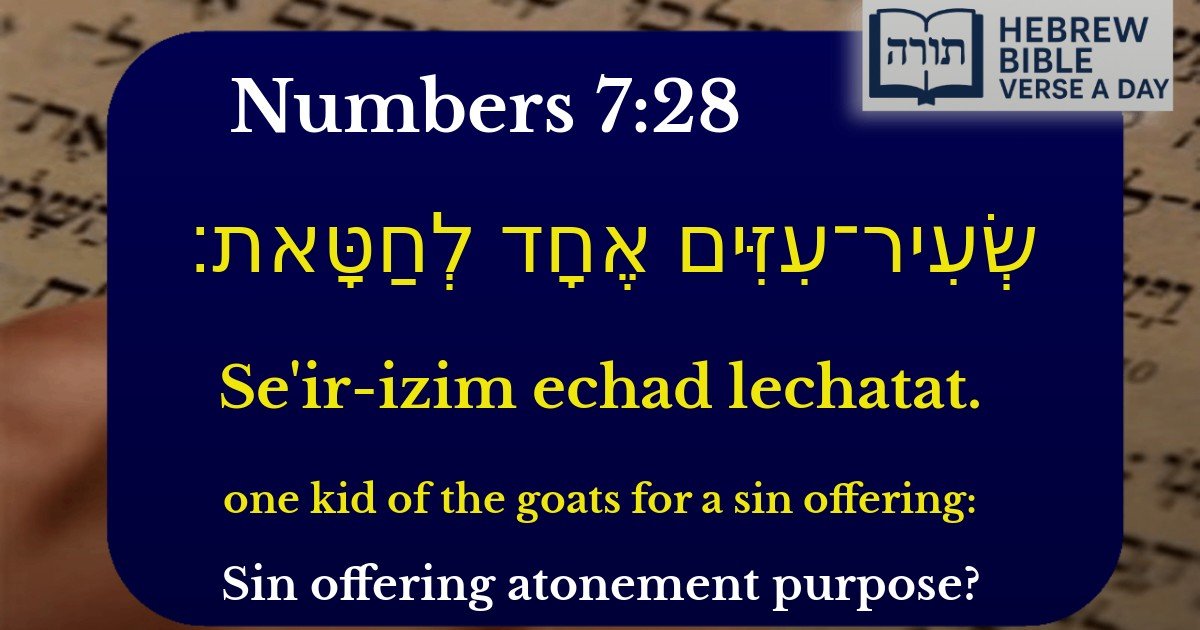
שְׂעִיר־עִזִּים אֶחָד לְחַטָּאת׃
English Translation
one kid of the goats for a sin offering:
Transliteration
Se'ir-izim echad lechatat.
Hebrew Leining Text
שְׂעִיר־עִזִּ֥ים אֶחָ֖ד לְחַטָּֽאת׃
🎵 Listen to leining
Parasha Commentary
📚 Talmud Citations
This verse is quoted in the Talmud.
📖 Yoma 66b
The verse is referenced in the discussion about the sin offerings brought on Yom Kippur, specifically regarding the goat offered as a sin offering.
📖 Menachot 45a
The verse is cited in the context of discussing the various types of offerings and their requirements, including the sin offering of a goat.
The Sin Offering (Chatat) of a Goat
The verse "שְׂעִיר־עִזִּים אֶחָד לְחַטָּאת" (one kid of the goats for a sin offering) refers to a specific type of korban (sacrifice) brought for certain unintentional sins. Rashi (Vayikra 4:23) explains that this offering is brought by an individual who transgresses one of the commandments unintentionally. The goat is specified here because it serves as an atonement for specific sins, particularly those related to idolatry or other severe transgressions when committed unintentionally.
Symbolism of the Goat
The choice of a goat (שְׂעִיר עִזִּים) as a sin offering carries deeper meaning. The Midrash (Vayikra Rabbah 5:6) connects this to the episode of Yosef and his brothers, where they slaughtered a goat to deceive Yaakov (Bereishit 37:31). The goat thus serves as a rectification (תיקון) for past sins involving deception or moral failings. Additionally, the Rambam (Moreh Nevuchim 3:46) suggests that the goat was commonly associated with idolatrous practices in ancient times, and its use as a sin offering symbolizes the rejection of such practices.
Halachic Details
Spiritual Lessons
The Chatat offering teaches the importance of accountability, even for unintentional sins. The Talmud (Shevuot 7b) emphasizes that atonement is necessary because negligence in mitzvot can lead to spiritual harm. The goat, as a symbol of rectification, reminds us of the need for introspection and repentance (teshuvah), aligning with the teachings of the Mesillat Yesharim on spiritual vigilance.