Frequently Asked Questions
Q: What does Numbers 7:39 mean?
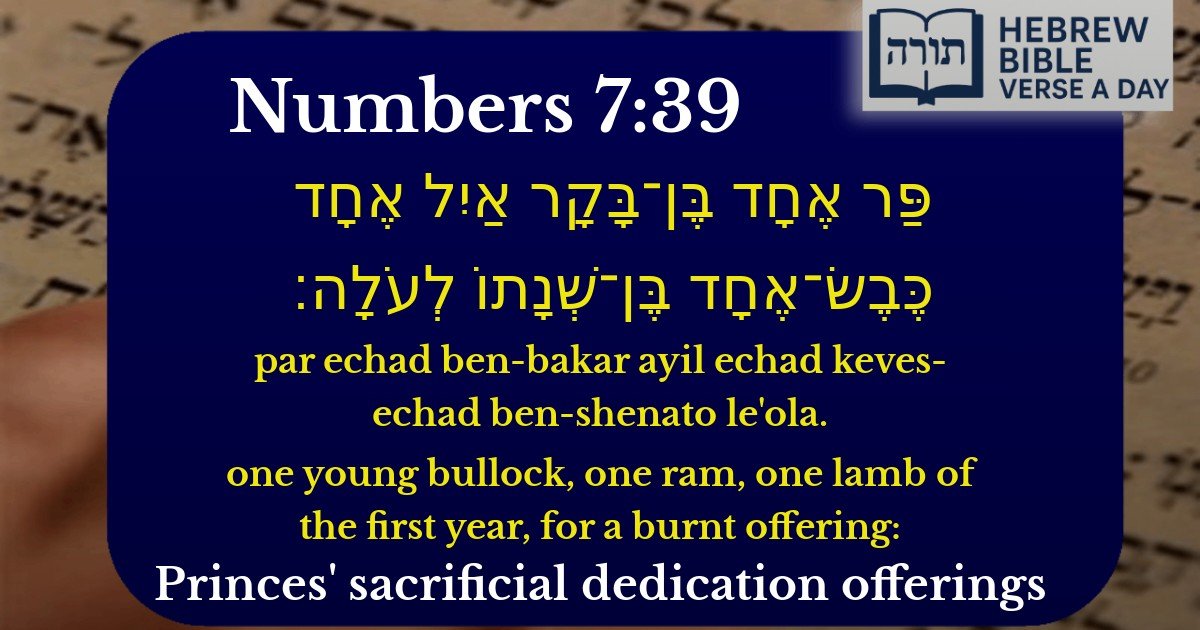
A: Numbers 7:39 describes the specific animals brought as offerings (קרבנות) by the leader of the tribe of Asher on the eighth day of the dedication of the Mishkan (Tabernacle). The verse lists a young bull, a ram, and a one-year-old lamb as burnt offerings (עולה), following the Torah's detailed instructions for sacrifices.
Q: Why were these specific animals chosen for the offering?
A: The Torah specifies these animals—bull, ram, and lamb—because each represents different levels of atonement and dedication. Rashi explains that the bull atones for unintentional sins, the ram for harsh speech or actions, and the lamb for minor transgressions. Each animal also symbolizes different aspects of service to Hashem.
Q: Why is the lamb required to be 'one year old'?
A: The Torah requires the lamb to be a בן שנה (one year old) because, as the Rambam explains in Hilchot Korbanot, animals at this age are in their prime and represent purity and innocence. This makes them fitting for an offering that symbolizes complete devotion to Hashem.
Q: What can we learn from this verse today?
A: Although we no longer bring animal sacrifices, the principle of dedicating our best to Hashem remains. The Midrash teaches that prayer (תפילה) has replaced sacrifices, and just as the offerings had to be unblemished, we should strive to approach prayer with sincerity and wholeheartedness.
Q: Why does each tribe bring the same offering in Numbers 7?
A: The Talmud (Sukkah 55b) explains that while each tribe brought identical offerings, their intentions and personal devotion were unique. This teaches that even when performing the same mitzvah, each person’s service of Hashem is individual and valued.


Explanation of the Verse
The verse describes the sacrificial offerings brought as an olah (burnt offering), consisting of three distinct animals: a young bullock (par echad ben-bakar), a ram (ayil echad), and a one-year-old lamb (keves echad ben-shanato). Each of these offerings holds specific significance in Jewish tradition.
Rashi's Commentary
Rashi (Vayikra 1:2) explains that the burnt offering (olah) is entirely consumed by fire on the altar, symbolizing complete dedication to Hashem. The three animals represent different levels of atonement and spiritual elevation:
Midrashic Insights
The Midrash (Vayikra Rabbah 2:11) teaches that these three animals correspond to the three patriarchs—Avraham, Yitzchak, and Yaakov—each embodying distinct virtues in their service to Hashem:
Halachic Perspective (Rambam)
Rambam (Hilchos Maaseh HaKorbanos 1:14) emphasizes that the burnt offering must be of the highest quality—unblemished and without defect—to be acceptable. The age specification (ben-shanato, "one year old") ensures the animal is at its prime, reinforcing the idea that offerings to Hashem must be given with excellence.
Symbolism in the Order
The sequence—bullock, ram, lamb—may also reflect a progression in spiritual refinement: