Frequently Asked Questions
Q: What is the significance of the silver dish and bowl mentioned in Numbers 7:43?
A: The silver dish (ka'arat kesef) and bowl (mizrak kesef) were part of the offerings brought by the tribal leaders during the dedication of the Mishkan (Tabernacle). According to Rashi, these vessels were used to hold the fine flour mixed with oil for the meal offering (mincha), symbolizing the leaders' dedication to serving Hashem with purity and generosity.
Q: Why were the weights of the silver dish and bowl specified in the verse?
A: The Torah specifies the weights (130 shekels for the dish and 70 shekels for the bowl) to emphasize the precision and sincerity of the offerings. The shekel mentioned is the 'shekel of the sanctuary' (shekel hakodesh), a sacred measurement used for holy matters. Rambam explains that this highlights the importance of giving with exactness and intention in divine service.
Q: What does the fine flour mixed with oil represent in this verse?
A: The fine flour (solet) mixed with oil (shemen) represents sustenance and devotion. The Midrash teaches that flour symbolizes basic nourishment, while oil represents wisdom and enlightenment. Together, they signify that our physical and spiritual efforts should be united in serving Hashem.
Q: How does this verse apply to us today?
A: While we no longer bring physical offerings, the principles remain relevant. The verse teaches us to give generously and precisely in our mitzvot (commandments) and avodat Hashem (service to G-d). Just as the tribal leaders brought their best, we should dedicate our finest efforts—whether in prayer, charity, or Torah study—with sincerity and exactness.
Q: Why did each tribal leader bring the same offering in Numbers 7?
A: Although each leader brought identical offerings, the Talmud (Sotah 13b) explains that each had unique intentions and personal devotion behind their gifts. This teaches that even when mitzvot appear similar externally, the inner kavanah (intention) makes each person's service distinct and precious before Hashem.

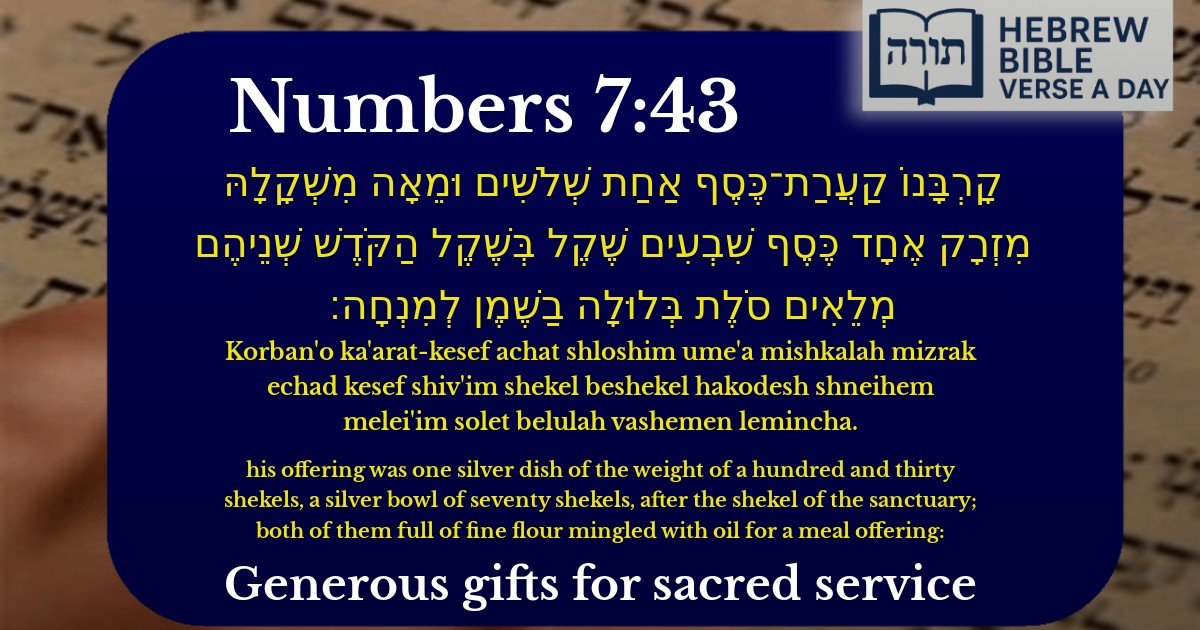

The Offering of the Silver Dish and Bowl
The verse describes the offering brought by one of the tribal leaders during the dedication of the Mishkan (Tabernacle). The offering consists of two silver vessels—a ka'arat kesef (silver dish) weighing 130 shekels and a mizrak echad kesef (silver bowl) weighing 70 shekels—both filled with fine flour mixed with oil for a meal offering.
Symbolism of the Weights
Rashi (Bamidbar 7:13) notes that the combined weight of the dish (130 shekels) and the bowl (70 shekels) totals 200 shekels, which corresponds to the weight of the silver sockets (adanim) used in the Mishkan's construction (Shemot 38:27). This hints at the connection between the leaders' offerings and the foundational elements of the Mishkan.
The Significance of Fine Flour and Oil
The mincha (meal offering) consisted of solet (fine flour) mixed with oil. The Talmud (Menachot 104b) explains that fine flour represents refinement of character, while oil symbolizes wisdom (as oil rises above other liquids). Thus, the offering alludes to the spiritual elevation and wisdom required in divine service.
The Silver Vessels
The Shekel of the Sanctuary
The phrase b'shekel hakodesh ("after the shekel of the sanctuary") emphasizes that these weights were measured according to the sacred standard used for all contributions to the Mishkan (Rambam, Hilchot Shekalim 1:5). This ensured uniformity and sanctity in all offerings.