
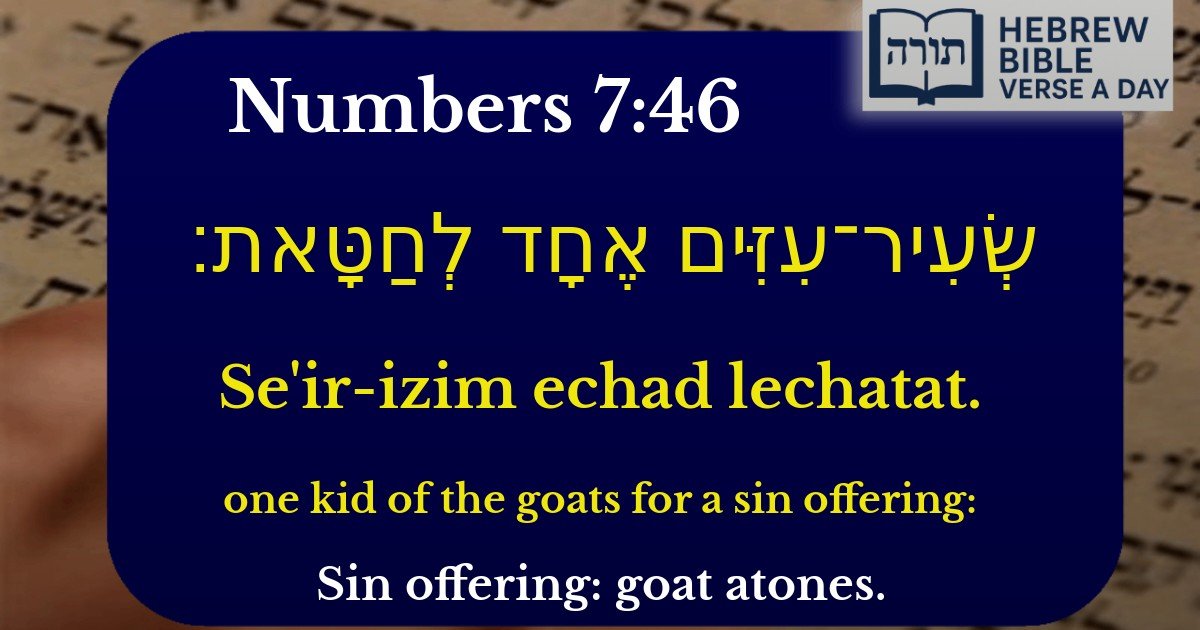

Numbers 7:46 - Sin offering: goat atones.

Numbers 7:46 - במדבר 7:46

Hebrew Text

שְׂעִיר־עִזִּים אֶחָד לְחַטָּאת׃

English Translation

one kid of the goats for a sin offering:

Transliteration

Se'ir-izim echad lechatat.

Hebrew Leining Text

שְׂעִיר־עִזִּ֥ים אֶחָ֖ד לְחַטָּֽאת׃

🎵 Listen to leining

Parasha Commentary

The Sin Offering (חַטָּאת) in Jewish Tradition

The phrase "שְׂעִיר־עִזִּים אֶחָד לְחַטָּאת" (one kid of the goats for a sin offering) appears multiple times in the Torah (e.g., Bamidbar 7:16, Vayikra 4:23) in the context of korbanot (sacrifices) brought for unintentional sins. Rashi (Vayikra 4:23) explains that this offering atones specifically for שגגה (unintentional transgressions) of certain commandments.

Symbolism of the Goat (שְׂעִיר עִזִּים)

  • Rambam (Moreh Nevuchim 3:46) suggests that goats were often used for sin offerings because they were commonly associated with idolatrous practices in ancient times. Using them for holy purposes served as a rejection of avodah zarah.
  • Talmud (Shevuot 9a) discusses how the שעיר עזים differs from other sin offerings, noting its unique role in communal atonement (e.g., Yom Kippur's שעיר המשתלח).

The Nature of the חטאת Offering

The חַטָּאת is distinct from other korbanot in its atonement function. Rambam (Hilchot Shegagot 1:1) emphasizes that it only atones when accompanied by תשובה (repentance). The Sefer HaChinuch (Mitzvah 134) explains that the physical act of bringing the offering helps awaken the sinner to spiritual remorse.

Halachic Details

  • Mishnah (Kritot 6:1) specifies that the שעיר עזים must be a male goat, unlike some other sin offerings which could be female.
  • Zevachim 7:4 discusses the precise slaughtering procedures required for this offering to be valid.

📚 Talmud Citations

This verse is quoted in the Talmud.

📖 Yoma 66b
The verse is referenced in the discussion about the sin offerings brought on Yom Kippur, specifically regarding the goat that was sacrificed as part of the atonement rituals.
📖 Menachot 110a
The verse is cited in the context of discussing various types of sin offerings and their requirements, emphasizing the specific use of a goat for certain offerings.

Frequently Asked Questions

Q: What does 'one kid of the goats for a sin offering' mean in Numbers 7:46?
A: This verse refers to a specific sacrifice brought by the tribal leader of Gad as part of the dedication offerings for the Mishkan (Tabernacle). The 'kid of the goats' was a young goat offered as a chatat (sin offering) to atone for unintentional sins. Rashi explains that these offerings demonstrated the leaders' commitment to serving Hashem properly.
Q: Why did they bring a goat as a sin offering?
A: In Torah law, a goat was one of the animals designated for chatat (sin) offerings (Vayikra 4:23). The Talmud (Chullin 22b) explains that goats were commonly used because they were readily available and their nature symbolizes bearing the burden of sin. The Rambam (Hilchot Maaseh Hakorbanot 1:14) details the specific laws of how such offerings were brought.
Q: What can we learn today from this verse about sin offerings?
A: While we cannot bring sacrifices today without the Beit Hamikdash (Temple), this verse teaches us about repentance. The Midrash (Bamidbar Rabbah 13:19) explains that offerings represented sincere remorse. Today, we emulate this through teshuva (repentance), tefillah (prayer), and tzedakah (charity), as taught by our sages (Talmud Berachot 32b).