

Join Our Newsletter To Be Informed When New Videos Are Posted
Hebrew Text
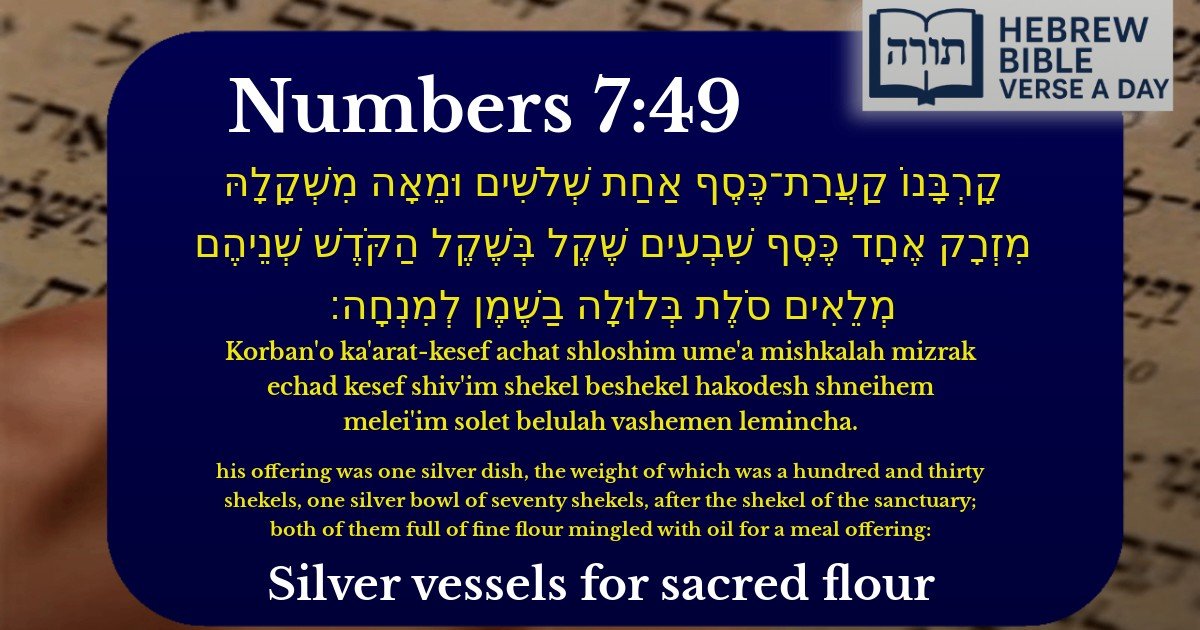
קָרְבָּנוֹ קַעֲרַת־כֶּסֶף אַחַת שְׁלֹשִׁים וּמֵאָה מִשְׁקָלָהּ מִזְרָק אֶחָד כֶּסֶף שִׁבְעִים שֶׁקֶל בְּשֶׁקֶל הַקֹּדֶשׁ שְׁנֵיהֶם מְלֵאִים סֹלֶת בְּלוּלָה בַשֶּׁמֶן לְמִנְחָה׃
English Translation
his offering was one silver dish, the weight of which was a hundred and thirty shekels, one silver bowl of seventy shekels, after the shekel of the sanctuary; both of them full of fine flour mingled with oil for a meal offering:
Transliteration
Korban'o ka'arat-kesef achat shloshim ume'a mishkalah mizrak echad kesef shiv'im shekel beshekel hakodesh shneihem melei'im solet belulah vashemen lemincha.
Hebrew Leining Text
קׇרְבָּנ֞וֹ קַֽעֲרַת־כֶּ֣סֶף אַחַ֗ת שְׁלֹשִׁ֣ים וּמֵאָה֮ מִשְׁקָלָהּ֒ מִזְרָ֤ק אֶחָד֙ כֶּ֔סֶף שִׁבְעִ֥ים שֶׁ֖קֶל בְּשֶׁ֣קֶל הַקֹּ֑דֶשׁ שְׁנֵיהֶ֣ם ׀ מְלֵאִ֗ים סֹ֛לֶת בְּלוּלָ֥ה בַשֶּׁ֖מֶן לְמִנְחָֽה׃
🎵 Listen to leining
Parasha Commentary
📚 Talmud Citations
This verse is not quoted in the Talmud.
Context of the Verse
This verse (Numbers 7:13) describes the offering brought by Nachshon ben Aminadav, the prince of the tribe of Yehudah, during the dedication of the Mishkan (Tabernacle). The offering consisted of a silver dish (ka'arat kesef) and a silver bowl (mizrak kesef), both filled with fine flour mixed with oil for a meal offering (mincha).
Explanation of the Offerings
According to Rashi, the ka'arat kesef (silver dish) and mizrak kesef (silver bowl) were vessels used for the meal offering. The dish held the flour, while the bowl was used for libations. The weights—130 shekels for the dish and 70 shekels for the bowl—are significant. The Midrash Bamidbar Rabbah (13:15) notes that these numbers correspond to the years of Yosef (130 when he stood before Pharaoh) and Moshe (70 when he ascended to receive the Torah), symbolizing unity among the tribes.
Symbolism of the Fine Flour and Oil
The soles (fine flour) and shemen (oil) represent refinement and purity in divine service. The Rambam (Moreh Nevuchim 3:46) explains that meal offerings symbolize humility, as flour is ground and refined, just as a person must refine their character. The oil represents wisdom and divine inspiration, as oil rises above other liquids (Menachot 85b).
The Shekel of the Sanctuary
The phrase "b'shekel hakodesh" (after the shekel of the sanctuary) emphasizes that these weights were measured according to the sacred standard used in the Mishkan. The Kli Yakar explains that this teaches that all offerings must be given with pure intent, weighed not by human standards but by divine measure.
Nachshon’s Leadership
Nachshon, as the first prince to bring an offering, demonstrated exemplary leadership. The Midrash Tanchuma (Naso 12) highlights that his tribe, Yehudah, was chosen to go first because of their future role in kingship (through David and Mashiach). His willingness to initiate the offerings set a precedent for the other tribes.