Frequently Asked Questions
Q: What does Numbers 7:51 mean?
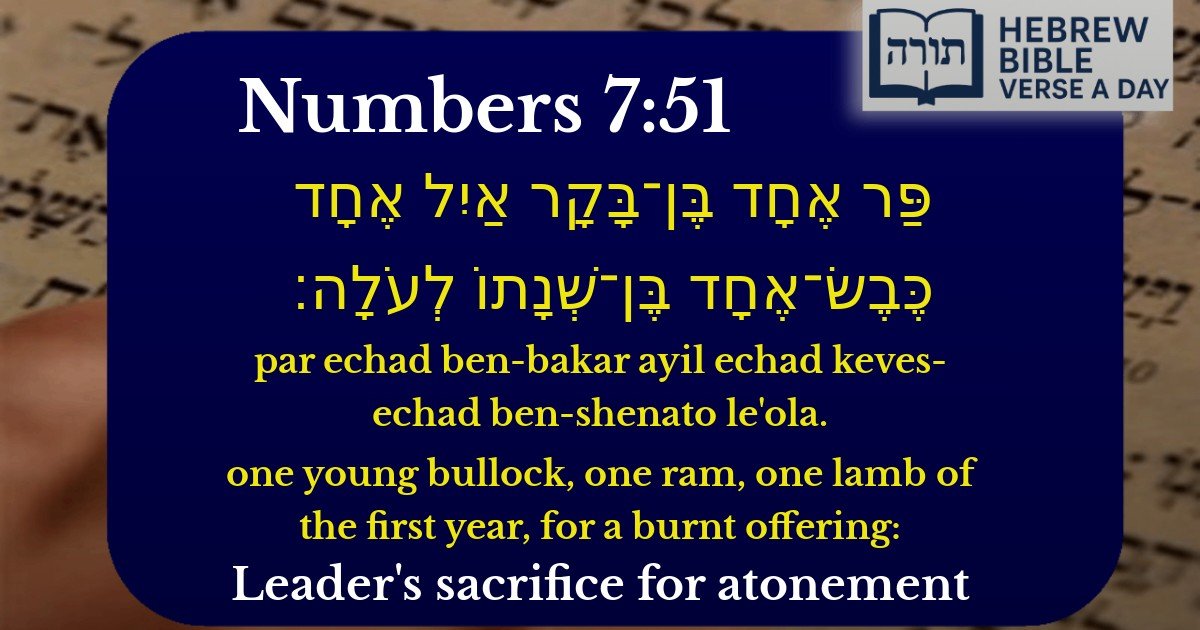
A: Numbers 7:51 describes the specific animals brought as offerings by one of the tribal leaders during the dedication of the Mishkan (Tabernacle). The verse lists a young bull, a ram, and a one-year-old lamb as burnt offerings (olah). These sacrifices were meant to draw the people closer to Hashem, as Rashi explains that the olah offering atones for improper thoughts and serves as a voluntary act of devotion.
Q: Why were these specific animals chosen for the burnt offering?
A: The Torah specifies these animals—a bull, a ram, and a lamb—because each represents different levels of atonement and dedication. The Rambam (Hilchot Ma'aseh HaKorbanot) teaches that larger animals like bulls were often brought for communal offerings, while rams and lambs were common for individual sacrifices. The age of the lamb (one year) signifies purity and innocence, making it fitting for a burnt offering.
Q: What can we learn from this verse today?
A: Although we no longer bring animal sacrifices after the destruction of the Beit HaMikdash (Temple), this verse teaches the importance of dedicating our best to Hashem. The Talmud (Berachot 17a) explains that today, prayer replaces sacrifices, and we should approach tefillah (prayer) with the same sincerity and devotion as those who brought offerings. The Midrash (Vayikra Rabbah) also emphasizes that acts of kindness and Torah study are considered 'offerings' in our time.
Q: Why is the burnt offering (olah) important in Judaism?
A: The olah (burnt offering) is unique because it is entirely consumed on the altar, symbolizing complete submission to Hashem. Rashi (on Vayikra 1:3) notes that the olah atones for improper thoughts and unfulfilled mitzvot. The Rambam (Moreh Nevuchim) adds that sacrifices were a way to transition ancient societies from idol worship to serving Hashem, with the olah representing total devotion.
Q: How does this verse connect to the dedication of the Mishkan?
A: Numbers 7 describes the offerings brought by the leaders of the twelve tribes during the Mishkan's inauguration. Each leader brought identical offerings, showing unity in serving Hashem. The Midrash (Bamidbar Rabbah) teaches that although the gifts were the same, each leader had unique intentions, highlighting that sincerity in avodat Hashem (service to G-d) matters more than external actions.


Explanation of the Verse
The verse describes the sacrificial offerings brought as an olah (burnt offering), consisting of three distinct animals: a young bullock (par echad ben-bakar), a ram (ayil echad), and a one-year-old lamb (keves echad ben-shanato). Each of these animals holds specific significance in the context of korbanot (sacrifices) as explained by traditional Jewish commentaries.
Rashi's Commentary
Rashi (Bamidbar 28:19) explains that these offerings were part of the daily and festival sacrifices in the Beit HaMikdash. The bullock, ram, and lamb represent different levels of atonement and dedication:
Symbolism of the Animals
The Rambam (Moreh Nevuchim 3:46) discusses the deeper symbolism behind these offerings:
Midrashic Insights
The Midrash (Bamidbar Rabbah 21:24) connects these offerings to the patriarchs:
Halachic Significance
The Talmud (Menachot 110a) emphasizes that the age of the lamb (ben-shanato, "one year old") is crucial, as younger or older animals are invalid for this offering. This teaches precision in fulfilling mitzvot.