Frequently Asked Questions
Q: What is a 'sacrifice of peace offerings' mentioned in Numbers 7:53?
A: A 'sacrifice of peace offerings' (זֶבַח הַשְּׁלָמִים) is one of the types of offerings brought in the Tabernacle and later in the Temple. According to Rashi, it is called 'peace offering' because it brings peace and harmony to the world. It was voluntary and could be brought to express gratitude, fulfill a vow, or as a freewill offering (Vayikra 3:1, 7:11-12).
Q: Why does the verse list specific numbers of animals (2 oxen, 5 rams, etc.)?
A: The verse lists the exact number of animals brought by Elishama ben Ammihud as his offering for the dedication of the Mishkan (Tabernacle). Each tribal leader brought identical offerings (as seen in Numbers 7), symbolizing unity and equality among the tribes. The Midrash (Bamidbar Rabbah 13:14) explains that though the offerings were the same, each leader had unique intentions behind them.
Q: What is the significance of Elishama ben Ammihud bringing this offering?
A: Elishama ben Ammihud was the prince of the tribe of Ephraim. His offering, like those of the other tribal leaders, demonstrated his commitment to the Mishkan and the service of Hashem. The Talmud (Sotah 37a) teaches that these offerings set a precedent for future generations in dedicating themselves to holy causes with generosity and sincerity.
Q: How does this verse apply to us today if we don’t bring sacrifices?
A: Though we no longer bring animal sacrifices, the principles behind the peace offering still apply. The Rambam (Hilchot De'ot 3:3) teaches that acts of kindness, prayer, and Torah study serve as spiritual substitutes. Additionally, the idea of giving generously and with pure intention (like Elishama) remains central to Jewish life.
Q: Why are lambs of the first year specified in the offering?
A: Lambs of the first year (כְּבָשִׂים בְּנֵי־שָׁנָה) were commonly used in sacrifices because they represent purity and innocence. Rashi (on Vayikra 9:3) explains that young animals were preferred for their tenderness and symbolic value in representing a fresh, wholehearted commitment to serving Hashem.


Context of the Verse
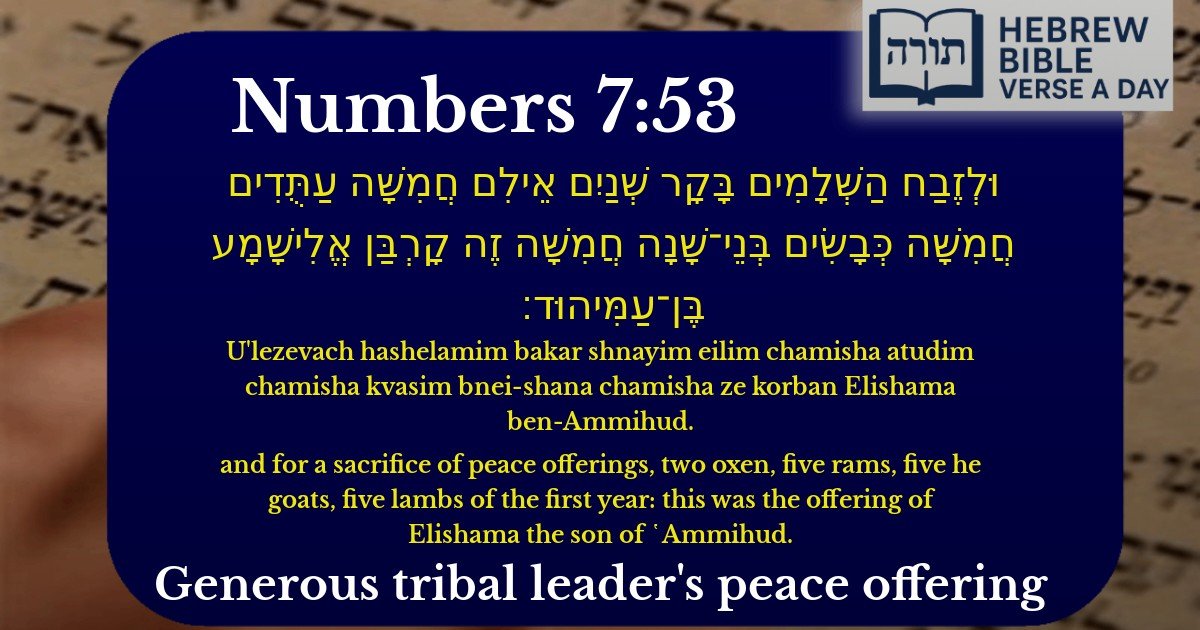
This verse appears in Bamidbar (Numbers) 7:53, detailing the offerings brought by Elishama ben Ammihud, the prince of the tribe of Ephraim, during the dedication of the Mishkan (Tabernacle). The offerings were part of a twelve-day ceremony in which each tribal leader presented identical sacrifices.
Nature of the Peace Offerings (זֶבַח הַשְּׁלָמִים)
Rashi explains that the shelamim (peace offerings) symbolize harmony and gratitude between Hashem, the Kohanim, and the one bringing the offering. Unlike other sacrifices, portions of the shelamim were eaten by the owner, the Kohanim, and offered on the altar, fostering unity.
Significance of the Numbers
Elishama ben Ammihud’s Role
According to Sforno, Elishama’s offering reflects his stature as a leader who sought to inspire his tribe in divine service. The uniformity of the offerings across all tribes, as highlighted in the Talmud (Menachot 65a), teaches that each tribe’s contribution was equally valued before Hashem.
Symbolism of the Animals
The Kli Yakar explains that each type of animal represents different aspects of divine service: