Frequently Asked Questions
Q: What is the significance of the silver dish and bowl mentioned in Numbers 7:55?
A: The silver dish (ka'arat kesef) and bowl (mizrak kesef) were part of the offerings brought by the tribal leaders during the dedication of the Mishkan (Tabernacle). According to Rashi, these vessels were filled with fine flour mixed with oil, symbolizing the importance of generosity and dedication to serving Hashem. The specific weights (130 shekels for the dish and 70 shekels for the bowl) teach precision in fulfilling mitzvot.
Q: Why were the offerings in Numbers 7:55 filled with fine flour and oil?
A: The fine flour (solet) mixed with oil represented a meal offering (mincha), which was a common form of sacrifice expressing gratitude and devotion to Hashem. The Talmud (Menachot 104b) explains that the fine flour signifies humility (since flour is ground finely), while the oil represents wisdom and joy, as oil was also used for anointing and light.
Q: What can we learn from the tribal leaders' offerings in this verse?
A: The offerings teach the importance of unity and individual contribution. Though each leader brought the same items (as detailed in Numbers 7), the Midrash (Bamidbar Rabbah 13:14) notes that each had unique intentions behind their gifts. This shows that even when performing the same mitzvah, every person’s service to Hashem is distinct and valuable.
Q: Why is the 'shekel of the sanctuary' mentioned in this verse?
A: The 'shekel of the sanctuary' (shekel hakodesh) was a standardized weight used for holy purposes, ensuring fairness and consistency in donations to the Mishkan. Rambam (Hilchos Shekalim 1:3) explains that this prevented disputes and ensured all contributions were measured equally, emphasizing honesty in serving Hashem.
Q: How does this verse apply to us today?
A: While we no longer bring physical offerings, the principles remain relevant. The fine flour and oil remind us to serve Hashem with humility (flour) and joy (oil). The equal but individualized offerings teach that everyone has a unique role in Torah and mitzvot. Additionally, the 'shekel of the sanctuary' reminds us to be precise and honest in our spiritual commitments.

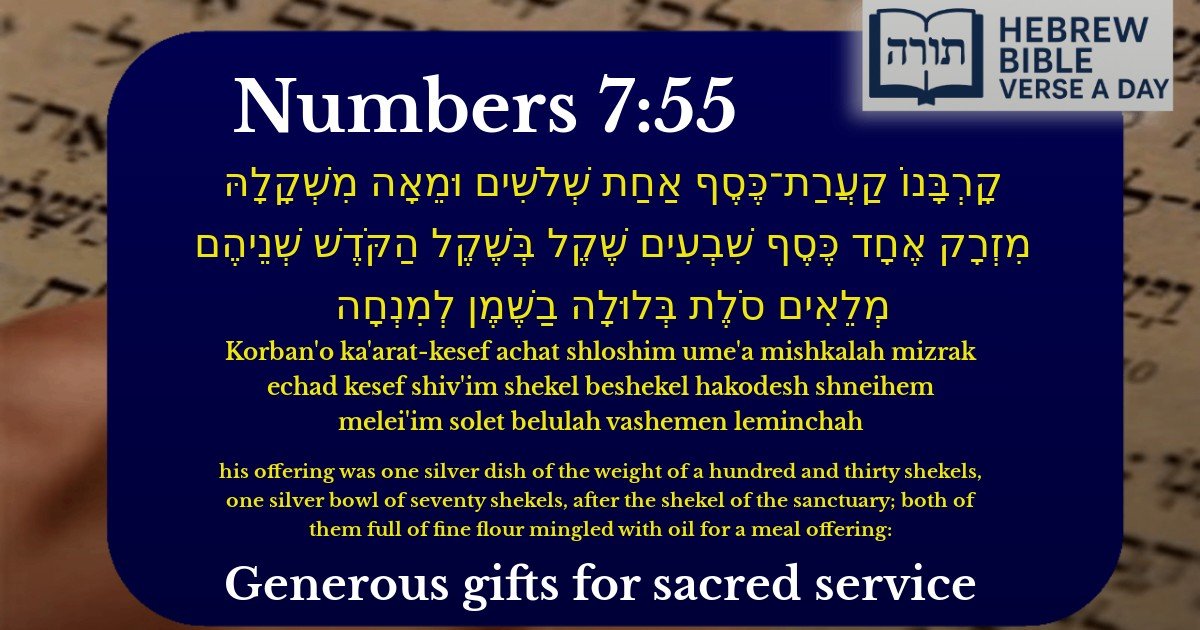

The Silver Dish and Bowl
The verse describes the offering brought by the Nasi (tribal leader) during the dedication of the Mishkan. Rashi (Bamidbar 7:13) explains that the ka'arat kesef (silver dish) and mizrak echad kesef (silver bowl) were vessels used in the service of the Mishkan. The dish weighed 130 shekels, and the bowl weighed 70 shekels, both according to the sacred shekel weight.
Symbolism of the Weights
The Baal HaTurim (Bamidbar 7:13) notes that the combined weight of the dish (130) and bowl (70) totals 200 shekels, which corresponds to the numerical value of the word צרור ("bundle"), alluding to the unity of the tribes in their offerings. The Kli Yakar adds that the 130 shekels of the dish represent the 130 years of Yitzchak's life before Yaakov was born, while the 70 shekels of the bowl correspond to the 70 souls of Yaakov's family who descended to Egypt.
The Flour and Oil Mixture
The verse states both vessels were filled with solet belulah vashemen lemincha (fine flour mixed with oil for a meal offering). The Rambam (Hilchos Maaseh HaKorbanos 13:4) explains that this was the standard mincha offering of a Nasi, consisting of:
The Sacred Shekel Standard
The specification beshekel hakodesh (by the shekel of the sanctuary) is emphasized. The Sifrei (Bamidbar 7:13) teaches that all weights in the Mishkan had to be measured according to this sacred standard, which was kept under strict supervision to prevent any dishonesty in measurements used for holy purposes.