Frequently Asked Questions
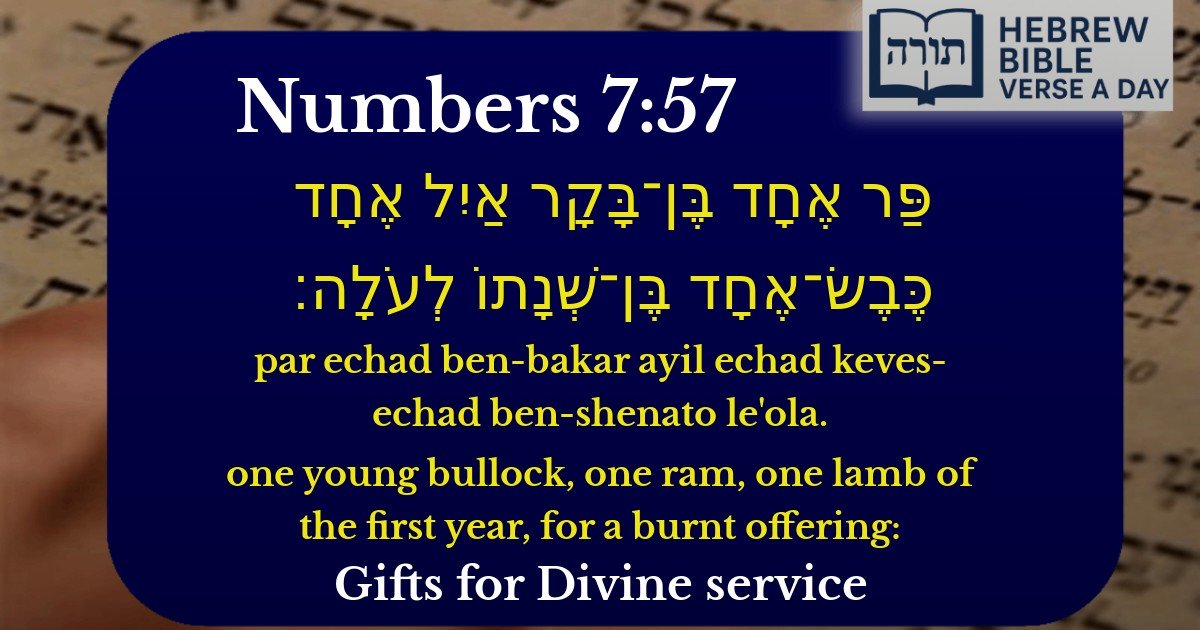
Q: What does Numbers 7:57 mean?
A: Numbers 7:57 describes the specific animals brought as offerings (korbanot) by the tribal leaders during the dedication of the Mishkan (Tabernacle). It lists one young bull, one ram, and one one-year-old lamb as burnt offerings (olah). These offerings symbolize complete devotion to Hashem, as the olah was entirely consumed on the altar.
Q: Why were these specific animals chosen for the burnt offering?
A: According to Jewish tradition (based on Rashi and Midrash), each animal represents different spiritual qualities. The bull symbolizes strength, the ram represents leadership, and the lamb signifies humility. Together, they teach that serving Hashem requires a balance of these traits. The age and condition (unblemished) also reflect the idea of offering our best to Hashem.
Q: Do we still bring these offerings today?
A: Since the destruction of the Holy Temple, we cannot bring animal offerings. However, the Rambam teaches that prayer (tefillah) temporarily substitutes for sacrifices. Many Jews study the laws of korbanot daily, and Orthodox liturgy includes prayers recalling the Temple service, with the hope that the Beit Hamikdash will be rebuilt speedily in our days.
Q: What lesson can we learn from this verse today?
A: The verse teaches the importance of giving our best to Hashem with sincerity. Just as the offerings had to be unblemished, we should strive to serve Hashem with pure intentions. The Talmud (Berachot 17a) explains that our deeds and Torah study can be like offerings when done with proper devotion.
Q: Why does the Torah specify the age of the lamb?
A: The Torah specifies a 'lamb of the first year' to teach that spiritual growth begins early in life. Rashi notes that young animals were preferred for offerings because they represent freshness and new beginnings. This reminds us that our relationship with Hashem should be constantly renewed with youthful enthusiasm (as per the ideal of 'hadrat kodesh').


Explanation of the Verse
The verse describes the sacrificial offerings brought as an olah (burnt offering), consisting of three distinct animals: a young bullock (par echad ben-bakar), a ram (ayil echad), and a lamb in its first year (keves echad ben-shanato). Each of these animals holds specific significance in Jewish tradition.
Rashi's Commentary
Rashi (Vayikra 1:3) explains that the burnt offering (olah) is entirely consumed on the altar, symbolizing complete dedication to Hashem. The three animals represent different levels of atonement and devotion:
Midrashic Insights
The Midrash (Vayikra Rabbah 2:11) connects these offerings to the patriarchs:
Halachic Perspective (Rambam)
Rambam (Hilchos Maaseh HaKorbanos 1:14) emphasizes that the burnt offering must be brought with proper intent (kavanah) and in accordance with halachic specifications. The age of the lamb (ben-shanato) ensures it is tender and unblemished, reflecting the ideal state of a sacrifice.
Symbolism in the Offerings
The three animals also correspond to different aspects of divine service:
Together, they teach that serving Hashem requires a balance of physical, emotional, and spiritual dedication.