
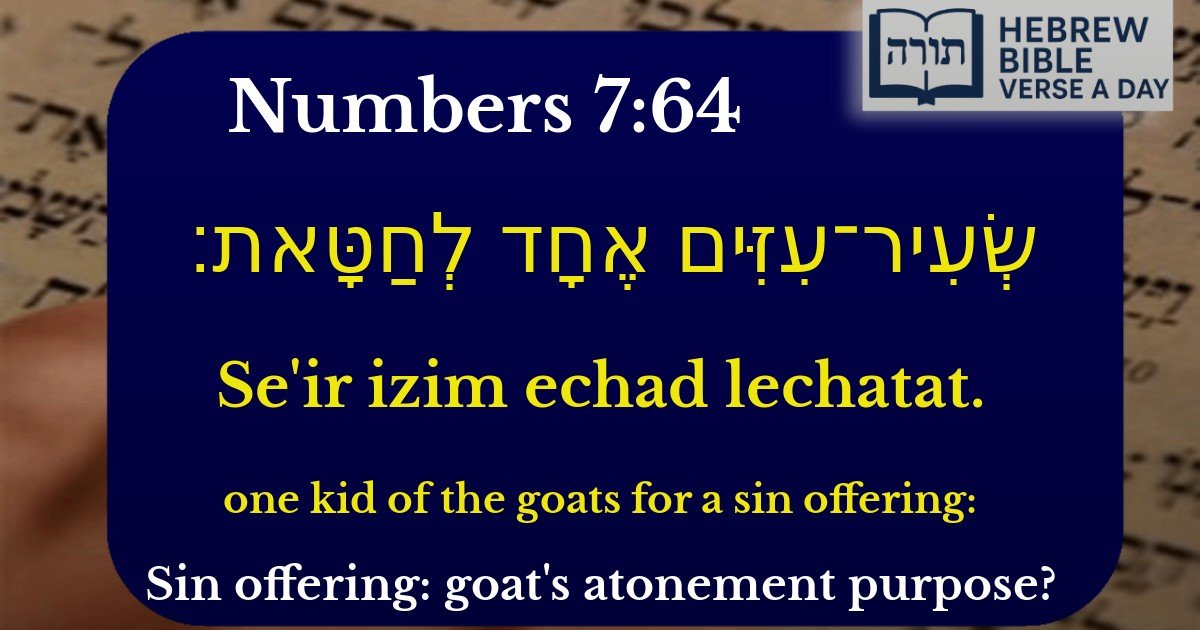

Numbers 7:64 - Sin offering: goat's atonement purpose?

Numbers 7:64 - במדבר 7:64

Hebrew Text

שְׂעִיר־עִזִּים אֶחָד לְחַטָּאת׃

English Translation

one kid of the goats for a sin offering:

Transliteration

Se'ir izim echad lechatat.

Hebrew Leining Text

שְׂעִיר־עִזִּ֥ים אֶחָ֖ד לְחַטָּֽאת׃

🎵 Listen to leining

Parasha Commentary

The Significance of the Goat as a Sin Offering

The verse "שְׂעִיר־עִזִּים אֶחָד לְחַטָּאת" (one kid of the goats for a sin offering) refers to the sacrificial offering brought to atone for unintentional sins. Rashi (Vayikra 4:23) explains that this offering is specifically for a nasi (a leader or prince) who sins unintentionally. The goat is chosen because its nature is associated with impulsiveness, symbolizing the impulsive nature of sin that must be rectified.

Symbolism of the Goat in Jewish Thought

The Midrash (Vayikra Rabbah 5:6) elaborates on the symbolism of the goat, connecting it to the story of Yosef and his brothers, who slaughtered a goat to deceive Yaakov (Bereishit 37:31). This teaches that the goat offering serves as a rectification (tikkun) for past sins involving deception or impulsive actions. The Rambam (Hilchot Teshuva 1:1) further emphasizes that sin offerings inspire repentance, as the physical act of sacrifice awakens the sinner to correct their ways.

Halachic Details of the Sin Offering

  • Type of Sin: The se'ir izim (goat) atones specifically for unintentional sins committed by a leader (Rambam, Hilchot Shegagot 15:6).
  • Procedure: The goat is slaughtered in the same manner as other korbanot chatat, with its blood sprinkled on the altar (Zevachim 5:3).
  • Spiritual Lesson: The Talmud (Yoma 36b) teaches that the goat offering reminds even leaders of their fallibility and need for atonement before Hashem.

📚 Talmud Citations

This verse is quoted in the Talmud.

📖 Yoma 66b
The verse is referenced in the discussion about the sin offerings brought on Yom Kippur, specifically regarding the goat offered as a sin offering.
📖 Menachot 45a
Mentioned in the context of discussing various types of offerings and their requirements, including the sin offering of a goat.

Frequently Asked Questions

Q: What does 'one kid of the goats for a sin offering' mean in Numbers 7:64?
A: In Numbers 7:64, 'one kid of the goats for a sin offering' refers to a specific sacrifice brought to atone for unintentional sins. According to Rashi, this was part of the offerings brought by the tribal leaders during the dedication of the Mishkan (Tabernacle). The goat served as a chatat (sin offering) to seek forgiveness from Hashem.
Q: Why was a goat specifically chosen for the sin offering?
A: The goat was chosen for the sin offering because, as explained in the Talmud (Yoma 67b), goats have symbolic significance in atonement. Additionally, the Midrash (Vayikra Rabbah 5:6) teaches that the goat's nature parallels certain human traits, making it a fitting offering for repentance.
Q: How does the concept of a sin offering apply today without the Temple?
A: Since we no longer have the Beit HaMikdash (Temple), we cannot bring animal sacrifices. However, the Rambam (Hilchot Teshuvah 1:3) teaches that sincere teshuvah (repentance), prayer, and acts of charity serve in place of sacrifices. The Torah's lesson remains relevant—atonement requires sincere effort and turning back to Hashem.
Q: What is the significance of the tribal leaders bringing this offering?
A: The tribal leaders brought this offering to demonstrate unity and collective responsibility. Rashi explains that their participation showed their commitment to atonement on behalf of the entire nation. It teaches us the importance of leaders setting an example in repentance and spiritual growth.