Frequently Asked Questions
Q: What does the 'golden spoon full of incense' represent in Numbers 7:68?
A: The golden spoon (כַּף זָהָב) filled with incense (קְטֹרֶת) was one of the gifts brought by the tribal leaders for the dedication of the Mishkan (Tabernacle). According to Rashi, the incense symbolizes prayer and devotion, as the Ketoret (incense) offered in the Temple represents the connection between the Jewish people and Hashem.
Q: Why was the spoon made of gold in this verse?
A: Gold represents purity and holiness in Jewish tradition. The Rambam explains that vessels used in the Mishkan and Temple were made of gold to signify their sacred purpose. The golden spoon, specifically, was used for handling the Ketoret, which required the highest level of sanctity.
Q: What is the significance of the incense (Ketoret) in the Torah?
A: The Ketoret (incense) was a special blend of spices offered twice daily in the Mishkan and later in the Temple. The Talmud (Keritot 6a) teaches that the Ketoret atones for sins and brings spiritual elevation. Its sweet fragrance symbolizes the Jewish people's devotion to Hashem.
Q: How does the offering of the golden spoon apply to us today?
A: Although we no longer have the Temple service, the Midrash (Tanchuma, Tetzaveh 14) teaches that our prayers today take the place of the Ketoret. Just as the incense ascended, our prayers rise to Heaven. The golden spoon reminds us to approach prayer with purity and sincerity.
Q: Why was the spoon measured as 'ten shekels' in weight?
A: The weight of ten shekels (עֲשָׂרָה זָהָב) signifies completeness in Jewish thought, as the number ten represents a minyan (quorum for prayer) and the Ten Commandments. Rashi explains that this measurement shows that the offering was given in full measure, reflecting the giver's wholehearted dedication.


Explanation of the Verse
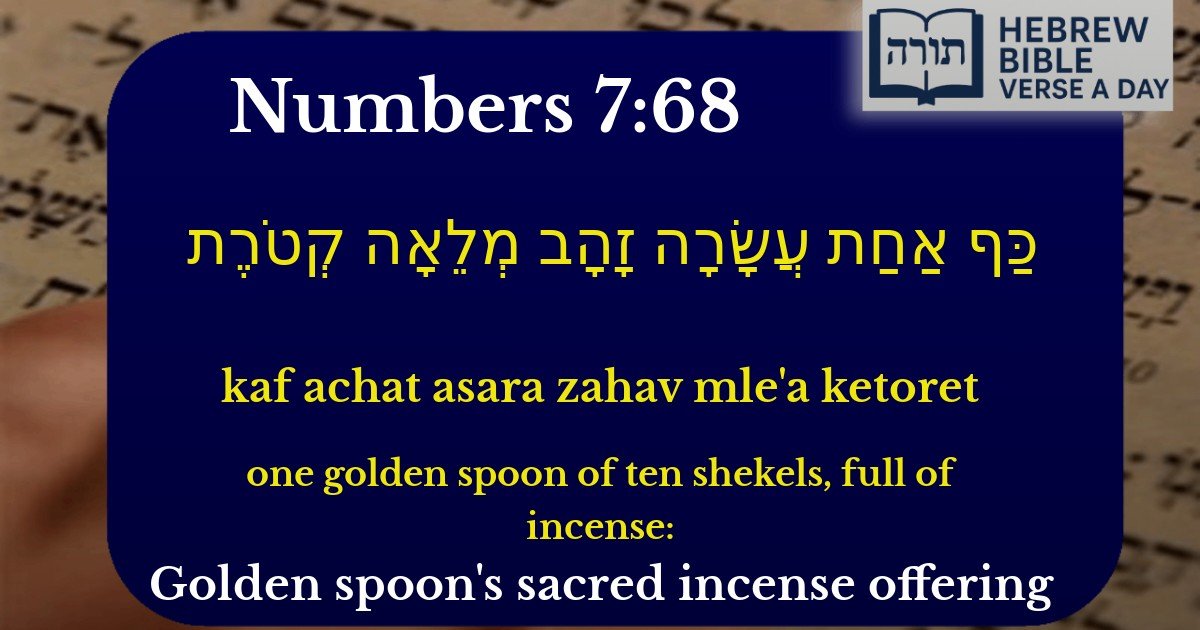
The verse "כַּף אַחַת עֲשָׂרָה זָהָב מְלֵאָה קְטֹרֶת" (one golden spoon of ten shekels, full of incense) appears in the context of the offerings brought by the tribal leaders (נשיאי ישראל) during the dedication of the Mishkan (Tabernacle), as detailed in Bamidbar (Numbers) 7:14. This offering was part of the korbanot (sacrifices) brought by Nachshon ben Aminadav, the prince of the tribe of Yehudah.
Symbolism of the Golden Spoon (כַּף זָהָב)
Rashi (Bamidbar 7:14) explains that the כַּף (spoon) was a vessel used for holding the קטרת (incense). The spoon was made of pure gold, symbolizing the purity and sanctity of the service in the Mishkan. The weight of the spoon—ten shekels—is significant, as the number ten often represents completeness in Jewish thought (e.g., the Ten Commandments, the Ten Utterances of Creation).
The Incense (קְטֹרֶת)
The ketoret (incense) was a sacred blend of spices offered daily in the Mishkan and later in the Beit HaMikdash (Temple). The Talmud (Keritot 6a) elaborates on the precise ingredients and preparation of the ketoret, emphasizing its spiritual significance. The incense represents the prayers of Israel ascending to Heaven, as alluded to in Tehillim (Psalms) 141:2: "Let my prayer be set forth as incense before You."
Spiritual Lessons
Rambam's Perspective
The Rambam (Hilchot Klei HaMikdash 2:4) discusses the vessels of the Mishkan, noting that their sanctity derived from their designated use in divine worship. The golden spoon, though a minor vessel, was integral to the ketoret offering, highlighting that every detail in avodat Hashem (service of G-d) holds significance.