Frequently Asked Questions
Q: What does Numbers 7:69 mean?
A: Numbers 7:69 describes the specific offerings brought by the leader of the tribe of Gad on the occasion of the dedication of the Mishkan (Tabernacle). The verse lists three animals: one young bull, one ram, and one lamb in its first year, all to be offered as an olah (burnt offering). According to Rashi, these offerings symbolize complete devotion to Hashem, as the olah is entirely consumed on the altar.
Q: Why are these specific animals mentioned in Numbers 7:69?
A: The Torah specifies these animals—a bull, a ram, and a lamb—because each represents different levels of value and symbolism. The bull (par) is the largest and most valuable, the ram (ayil) is intermediate, and the lamb (keves) is smaller, showing that all types of offerings are meaningful. The Rambam explains in Hilchos Maaseh HaKorbanos that these distinctions teach that everyone can contribute according to their ability.
Q: What is the significance of the burnt offering (olah) in Numbers 7:69?
A: The olah (burnt offering) in Numbers 7:69 is significant because it is entirely consumed on the altar, symbolizing total dedication to Hashem. Unlike other offerings where parts are eaten, the olah represents complete submission. The Talmud (Zevachim 6a) teaches that the olah atones for improper thoughts, emphasizing the importance of pure intentions in serving Hashem.
Q: Why does the verse specify a lamb 'in its first year'?
A: The Torah specifies a lamb 'in its first year' (ben shanato) because young animals are considered pure and unblemished, making them ideal for sacrifices. Rashi explains that this requirement ensures the highest quality offering. The Midrash (Bamidbar Rabbah) also teaches that youth symbolizes freshness and renewal in one's service to Hashem.
Q: How does Numbers 7:69 apply to us today without the Temple?
A: Although we no longer bring animal offerings, the lesson of Numbers 7:69 applies today through prayer, Torah study, and acts of kindness, which the Sages say substitute for sacrifices (Talmud Berachos 26a). The Rambam (Hilchos Teshuvah) teaches that sincere repentance and devotion can achieve what sacrifices once did, keeping the spirit of the olah alive in our daily lives.

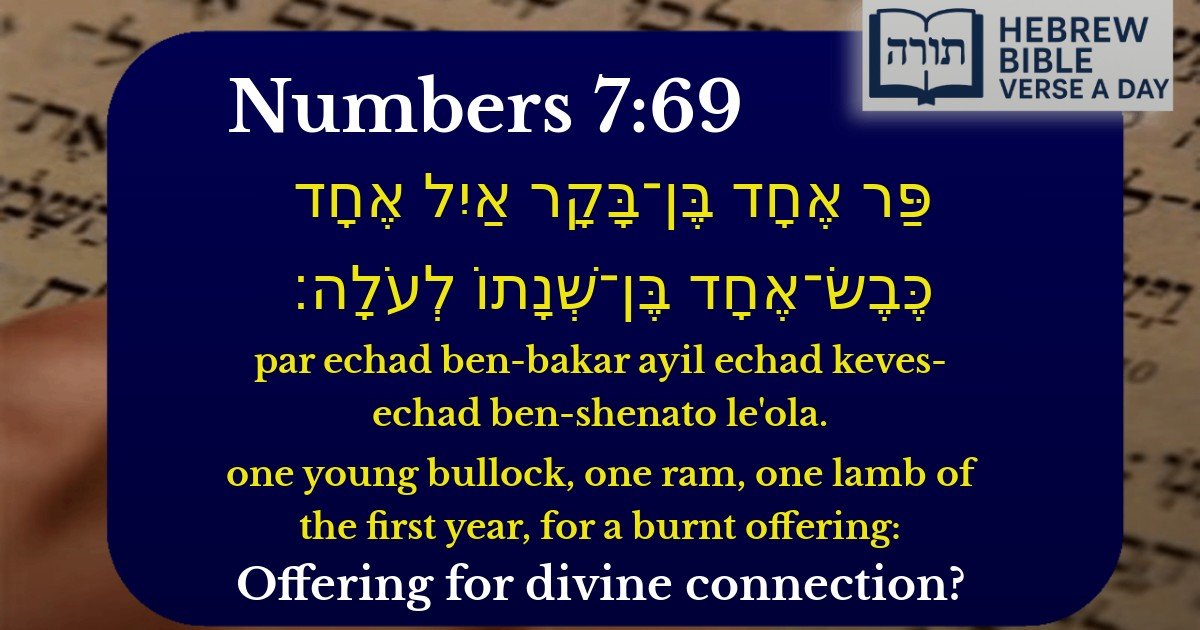

Verse Analysis: Sacrificial Offerings
The verse describes three distinct animals required for a burnt offering (olah): a young bullock (par echad ben-bakar), a ram (ayil echad), and a one-year-old lamb (keves echad ben-shanato). Each of these offerings holds symbolic and halachic significance in Jewish tradition.
Rashi's Commentary
Rashi (Bamidbar 28:19) explains that these offerings were part of the daily and festival sacrifices in the Beit HaMikdash. The bullock, being the largest, represents atonement for the gravest sins, while the ram and lamb correspond to lesser transgressions. The specification of "one" (echad) emphasizes the unity and singularity of the Jewish people in serving Hashem.
Symbolism of the Animals
Halachic Significance
The requirement that the lamb be "of the first year" (ben-shanato) is derived from Vayikra 22:27, which states that an animal must be at least eight days old to be sacrificed. The Rambam (Hilchos Maaseh HaKorbanos 1:14) rules that younger animals are invalid, as they lack the physical completeness required for offerings.
Midrashic Insight
The Midrash Tanchuma (Emor 14) connects these offerings to the three patriarchs: Avraham (symbolized by the bullock, as he hosted guests with beef), Yitzchak (the ram of the Akeidah), and Yaakov (the lamb, as he tended flocks). This teaches that our service to Hashem should embody the virtues of all three forefathers.