Frequently Asked Questions
Q: What is the meaning of the peace offering (zevach shelamim) mentioned in Numbers 7:71?
A: The peace offering (zevach shelamim) is one of the sacrifices described in the Torah, symbolizing gratitude, fulfillment of a vow, or a voluntary gift to Hashem. Unlike other offerings, parts of it were eaten by the person bringing it, the Kohanim (priests), and sometimes others, fostering unity and joy. Rashi explains that it is called 'shelamim' (from 'shalom,' meaning peace) because it brings peace to the world by aligning the person with Hashem, the Kohanim, and the altar.
Q: Why did Achi'ezer bring specific numbers of animals (2 oxen, 5 rams, etc.) in his offering?
A: The Torah lists the exact numbers of animals brought by Achi'ezer, the prince of the tribe of Dan, to show the equality and unity among all the tribes. Each tribal leader brought identical offerings (as seen in Numbers 7), emphasizing that no tribe was greater than another in their dedication to the Mishkan (Tabernacle). The Midrash teaches that this teaches us the importance of humility and collective responsibility in serving Hashem.
Q: What lesson can we learn from Achi'ezer's offering in this verse?
A: Achi'ezer's offering teaches us the importance of generosity and commitment to communal worship. The Rambam (Hilchot Ma'aseh HaKorbanot) explains that bringing sacrifices was not just a ritual but a way to deepen one's relationship with Hashem. By willingly giving these animals, Achi'ezer demonstrated devotion and set an example for future generations about contributing to sacred causes with a full heart.
Q: How does the concept of peace offerings apply to us today without the Temple?
A: Although we cannot bring physical peace offerings today without the Beit HaMikdash (Temple), the Talmud (Berachot 55a) teaches that acts of kindness, prayer, and Torah study can serve as substitutes. The idea behind shelamim—promoting peace, gratitude, and connection with Hashem—remains relevant. Many also see the shared meals at Shabbat and Yom Tov tables as a spiritual continuation of the unity and joy symbolized by the peace offering.
Q: Why does the Torah list each tribal leader's offering individually if they were all the same?
A: Even though each tribal leader brought identical offerings, the Torah lists them separately to honor each one’s unique intent and effort. Rashi (on Numbers 7:10) notes that this teaches us that Hashem values every individual’s contribution equally, regardless of outward appearances. The repetition also emphasizes the importance of personal dedication in serving Hashem, as each leader’s offering was cherished individually.

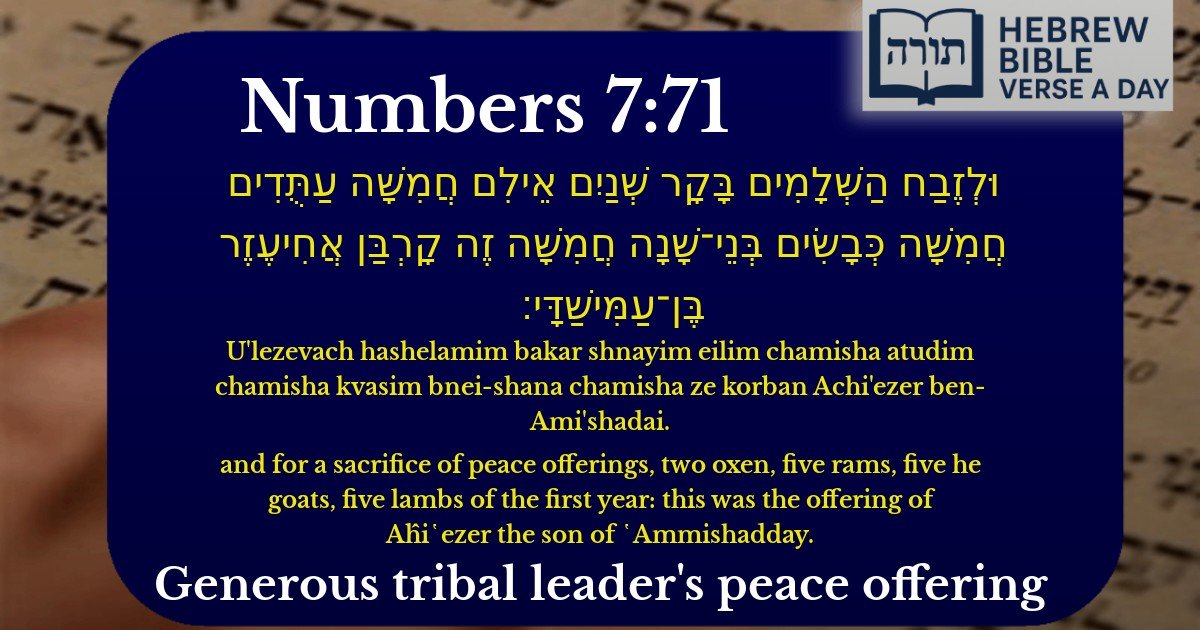

Overview of the Verse
The verse (Bamidbar 7:71) describes the korban shelamim (peace offering) brought by Achi'ezer ben Amishaddai, the prince of the tribe of Dan, during the dedication of the Mishkan. The offering consisted of two oxen, five rams, five male goats, and five yearling lambs. This was part of the twelve-day dedication ceremony where each tribal leader presented identical offerings.
Significance of the Numbers
Rashi (on Bamidbar 7:17) explains that the numbers of animals correspond to the following symbolism:
The Nature of the Shelamim Offering
The Rambam (Hilchot Ma'aseh HaKorbanot 9:1) explains that the shelamim offering signifies peace and gratitude between man and Hashem. Unlike other sacrifices, parts of it were eaten by the owner, shared with the Kohanim, and offered on the altar, symbolizing unity among the Jewish people and their connection to the Divine.
Achi'ezer ben Amishaddai's Role
The Midrash (Bamidbar Rabbah 13:19) notes that Achi'ezer, as the leader of Dan, represented a tribe that was often in the rear during travel. Despite this, his offering was equal to all other leaders, teaching that every tribe—regardless of position—has equal importance in serving Hashem.
Spiritual Lessons