

Join Our Newsletter To Be Informed When New Videos Are Posted
Hebrew Text
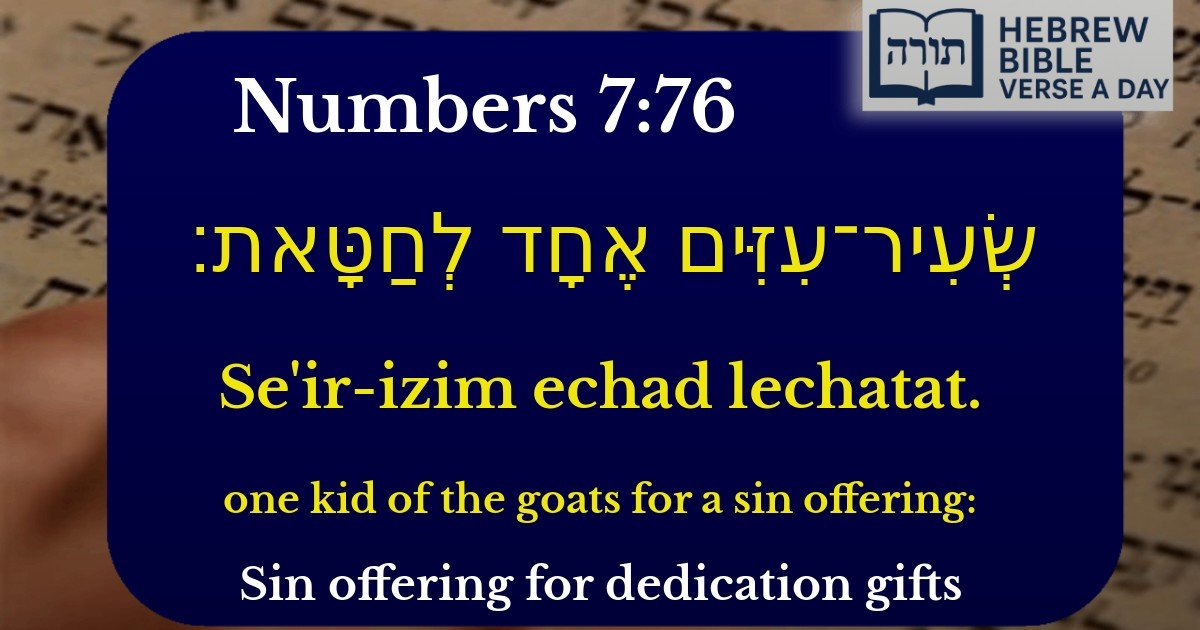
שְׂעִיר־עִזִּים אֶחָד לְחַטָּאת׃
English Translation
one kid of the goats for a sin offering:
Transliteration
Se'ir-izim echad lechatat.
Hebrew Leining Text
שְׂעִיר־עִזִּ֥ים אֶחָ֖ד לְחַטָּֽאת׃
🎵 Listen to leining
Parasha Commentary
📚 Talmud Citations
This verse is quoted in the Talmud.
📖 Yoma 66b
The verse is referenced in the discussion about the sin offerings brought on Yom Kippur, specifically regarding the goat offered as a sin offering.
📖 Menachot 45a
The verse is cited in the context of discussing the various types of offerings, including the sin offering of a goat.
The Sin Offering (חַטָּאת) of a Goat
The verse "שְׂעִיר־עִזִּים אֶחָד לְחַטָּאת" refers to the offering of a male goat as a sin offering. This type of sacrifice is prescribed in various contexts in the Torah, particularly for unintentional sins or communal atonement.
Rashi's Explanation
Rashi (Vayikra 4:23) explains that the term שְׂעִיר־עִזִּים specifically denotes a male goat, as opposed to a female goat (עֵז). This distinction is important because certain korbanot require a male animal, while others require a female, depending on the nature of the transgression and the status of the individual bringing the offering.
Purpose of the Sin Offering
According to Rambam (Hilchot Maaseh HaKorbanot 1:4), the חַטָּאת serves to atone for sins committed בשוגג (unintentionally). The offering of a goat, as opposed to a bull or lamb, is often specified for particular sins or communal obligations, such as the offerings brought on Rosh Chodesh and festivals (Bamidbar 28:15).
Symbolism of the Goat
The Midrash (Vayikra Rabbah 5:6) suggests that the goat is chosen for atonement because of its symbolic connection to the sin of the brothers selling Yosef, where they used a goat's blood to deceive Yaakov (Bereishit 37:31). Thus, the goat serves as a rectification for past sins involving deception or wrongdoing.
Halachic Details