Frequently Asked Questions
Q: What is the significance of the burnt offering described in Numbers 7:81?
A: The burnt offering (עֹלָה) in Numbers 7:81 represents complete devotion to Hashem, as the entire animal is consumed on the altar. According to Rashi, this symbolizes the giver's total commitment to serving G-d. The Rambam (Hilchot Ma'aseh HaKorbanot) explains that burnt offerings atone for improper thoughts and serve as a way to draw closer to Hashem.
Q: Why does the verse specify different animals (bullock, ram, lamb) for the offering?
A: The different animals represent varying levels of sacrifice based on one's means, as explained in the Talmud (Chulin 84a). A bullock (פַּר) is the most valuable, followed by a ram (אַיִל), then a lamb (כֶּבֶשׂ). This teaches that Hashem accepts offerings according to each person's capability, as long as the intention is sincere (Midrash Tanchuma, Vayikra 3).
Q: What does 'lamb of the first year' mean in this verse?
A: The phrase 'lamb of the first year' (כֶּבֶשׂ־אֶחָד בֶּן־שְׁנָתוֹ) refers to a young, unblemished lamb, as required for sacrifices (Vayikra 22:27). The Talmud (Zevachim 12a) explains that animals must be at least eight days old but ideally within their first year for sacrifices, representing purity and freshness in serving Hashem.
Q: How does this verse relate to the dedication of the Mishkan (Tabernacle)?
A: Numbers 7 describes the offerings brought by tribal leaders during the Mishkan's dedication. Rashi notes that each leader brought identical offerings to show equality before Hashem, despite their different personalities and roles. This teaches that all Jews, regardless of status, can connect to G-d through sincere service (Midrash Bamidbar Rabbah 13:15).
Q: Can we learn anything from this verse today, when we no longer bring sacrifices?
A: Yes! The Rambam (Moreh Nevuchim 3:32) explains that sacrifices were a temporary means to wean people from idolatry. Today, our prayers (תְּפִלָּה) replace sacrifices (Hosea 14:3). Just as the offerings required proper intent, our prayers must be heartfelt. The Talmud (Berachot 6b) teaches that studying the laws of sacrifices achieves similar spiritual benefits.

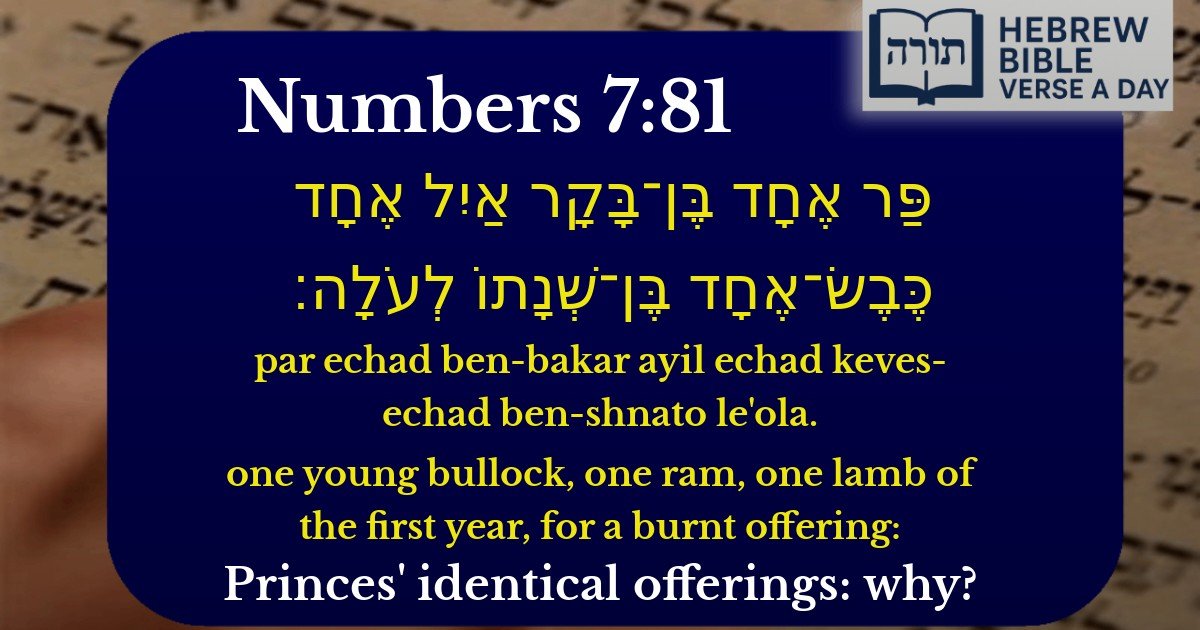

Explanation of the Verse
The verse describes the sacrificial offerings brought for the olah (burnt offering), consisting of three distinct animals: a young bullock (par echad ben-bakar), a ram (ayil echad), and a lamb in its first year (keves echad ben-shanato). Each of these animals holds specific significance in the sacrificial service, as elaborated by traditional Jewish commentators.
Rashi's Commentary
Rashi (Vayikra 1:3) explains that the term par (bullock) refers to a mature ox, while ben-bakar specifies that it must be a young animal, not yet fully grown. The ram (ayil) is a male sheep, and the lamb (keves) must be within its first year, as indicated by ben-shanato. Rashi emphasizes that these specifications ensure the highest quality of offerings brought before Hashem.
Symbolism of the Offerings
According to the Midrash (Vayikra Rabbah 2:10), each of these animals corresponds to different aspects of service to Hashem:
Halachic Requirements
The Rambam (Hilchot Maaseh HaKorbanot 1:14) details the halachic requirements for these offerings:
Spiritual Lessons
The Kli Yakar (Vayikra 1:3) teaches that these offerings remind us of the need for balanced spiritual growth—combining strength (bullock), leadership (ram), and humility (lamb). Just as these animals are brought in specific conditions, we too must refine our character traits to serve Hashem properly.