Frequently Asked Questions
Q: What does 'one kid of the goats for a sin offering' mean in Numbers 7:82?
A: This verse refers to a specific sacrifice brought by the tribal leader of Dan on the eighth day of the Mishkan's inauguration. The 'kid of the goats' (שְׂעִיר־עִזִּים) was a young goat offered as a chatat (sin offering) to atone for unintentional sins, as explained in Vayikra (Leviticus) 4:28 and discussed by Rashi there.
Q: Why did they bring a goat as a sin offering?
A: The Torah prescribes different animals for different sacrifices. A goat was commonly used for sin offerings (as seen in Vayikra 4:23-28). Rashi explains that the size and nature of the goat made it an appropriate offering for atonement, representing the sinner's desire to correct their ways before Hashem.
Q: What can we learn from this verse about repentance?
A: This verse teaches that even unintentional sins require atonement. The Rambam (Hilchot Teshuva 1:1) explains that while sacrifices were part of the repentance process in Temple times, today we achieve atonement through sincere repentance, prayer, and charity. The goat offering reminds us to take responsibility for our actions.
Q: Why is this verse important in the context of Numbers 7?
A: Numbers 7 details the identical offerings brought by each tribal leader during the Mishkan's dedication. This verse shows that despite their different personalities, all leaders followed the same Divine command equally. The Talmud (Sotah 13b) derives from this the importance of unity in serving Hashem.
Q: How does this apply to us today without the Temple?
A: While we cannot bring sacrifices today, the principle remains relevant. The Midrash (Tanchuma Vayikra 8) teaches that our prayers now stand in place of sacrifices. Just as the goat atoned for sins then, today we seek atonement through teshuva (repentance), tefillah (prayer), and tzedakah (charity), as explained in the Talmud (Berachot 26b).

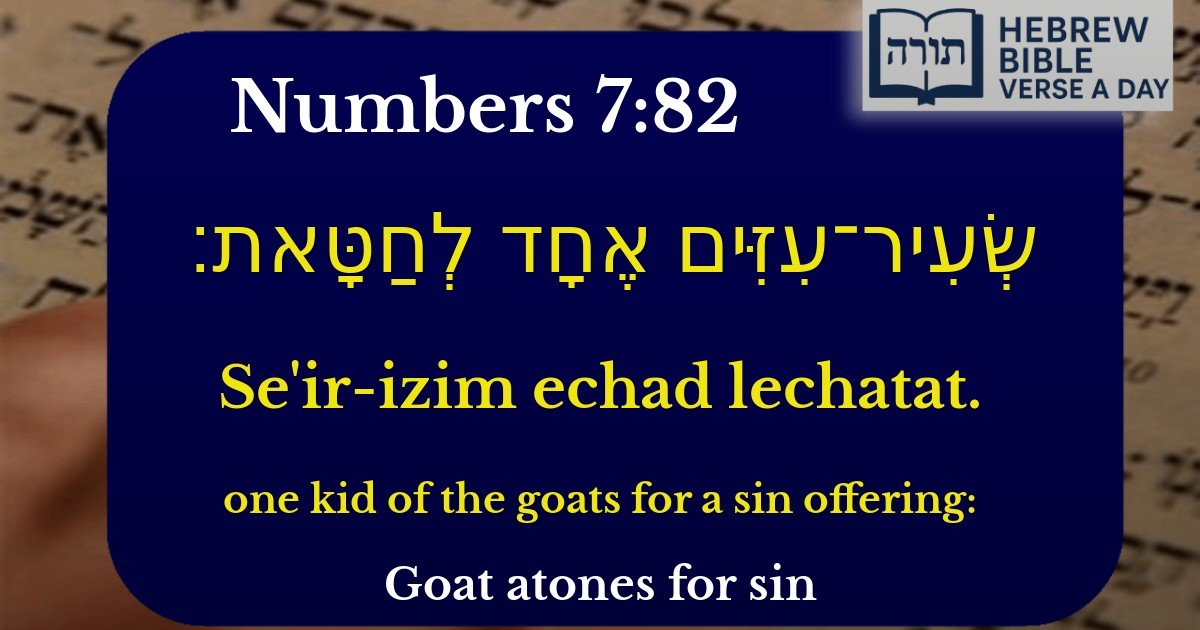

The Sin Offering (חַטָּאת) in Jewish Tradition
The verse "שְׂעִיר־עִזִּים אֶחָד לְחַטָּאת" (one kid of the goats for a sin offering) refers to a specific type of korban (sacrifice) brought for unintentional sins. The chatat (sin offering) serves as a means of atonement, as detailed in Vayikra (Leviticus) 4-5. Rashi (Vayikra 4:23) explains that the se'ir izim (goat) is designated for certain communal and individual sins, particularly those of a leader (nasi) or the entire community.
Symbolism of the Goat
The choice of a goat for this offering carries deeper meaning. The Midrash (Vayikra Rabbah 5:6) connects the goat to the episode of Yosef and his brothers, where they slaughtered a goat to deceive Yaakov (Bereishit 37:31). This teaches that the goat atones for sins involving deception or hidden wrongdoing. Rambam (Hilchot Teshuva 1:1) emphasizes that true repentance is still required alongside the offering.
Halachic Details
Spiritual Lessons
The Kli Yakar (Vayikra 4:23) notes that the goat represents the "stubbornness" (עַזּוּת) of the yetzer hara (evil inclination). By offering it, we symbolically subdue our negative traits. The Chatam Sofer adds that the se'ir (goat) alludes to sa'ir (hairy), representing externalities—teaching that repentance must address both outward actions and inner intentions.