Frequently Asked Questions
Q: What does Numbers 7:87 mean?
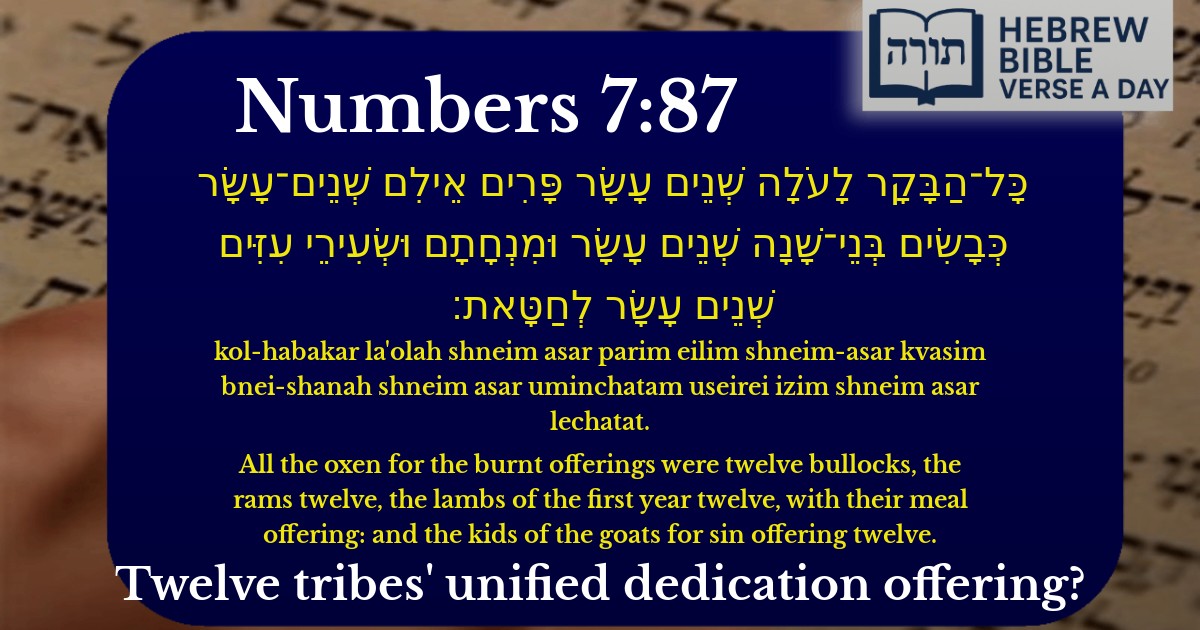
A: Numbers 7:87 summarizes the offerings brought by the leaders of the twelve tribes of Israel during the dedication of the Mishkan (Tabernacle). Each leader brought identical offerings: twelve bulls for burnt offerings, twelve rams, twelve yearling lambs with their meal offerings, and twelve goats for sin offerings. This shows the unity and equality of all tribes in serving Hashem.
Q: Why were there twelve of each type of offering in Numbers 7:87?
A: There were twelve of each offering because there were twelve tribes of Israel, and each tribe's leader brought the same offering. Rashi explains that this teaches us that no tribe was considered greater than another in bringing these offerings—all were equal before Hashem in their dedication to the Mishkan.
Q: What is the significance of the different types of offerings mentioned in Numbers 7:87?
A: The verse mentions burnt offerings (olah), meal offerings (mincha), and sin offerings (chatat). The burnt offering represents complete devotion to Hashem, the meal offering shows gratitude, and the sin offering atones for mistakes. Together, they symbolize different aspects of serving Hashem with sincerity and repentance.
Q: How does Numbers 7:87 apply to us today?
A: Although we do not currently bring animal offerings, the principles behind them remain relevant. The unity of the tribes teaches us the importance of working together in serving Hashem. The different offerings remind us to approach Hashem with devotion (prayer), gratitude (thanksgiving), and repentance (teshuvah).
Q: Why is the dedication of the Mishkan important in Judaism?
A: The Mishkan was the first centralized place of worship for the Jewish people, a dwelling place for the Divine Presence. Its dedication, including the offerings in Numbers 7:87, marked a key moment in our relationship with Hashem. The Talmud teaches that the Mishkan's service laid the foundation for the later Beit Hamikdash (Temple) and our prayers today.


Context of the Verse
The verse (Bamidbar 29:14) describes the additional sacrifices (musafim) brought on the festival of Sukkot, specifically detailing the offerings for the first day. The number twelve corresponds to the twelve tribes of Israel, symbolizing the unity and collective atonement of the nation.
Symbolism of the Twelve Offerings
Rashi explains that the twelve bullocks represent the twelve tribes, emphasizing that each tribe has an equal share in the communal service of Hashem. The Ramban adds that the repetition of the number twelve underscores the completeness of the nation's devotion during this festival.
Types of Sacrifices
The Meal Offering (מִנְחָתָם)
The accompanying meal offerings, made of fine flour and oil, signify gratitude and humility. The Sforno teaches that these represent the dedication of one’s material possessions to Hashem, complementing the animal sacrifices.
Progressive Nature of Sukkot Offerings
The Talmud (Sukkah 55b) notes that the number of bullocks decreases each day of Sukkot (from thirteen to seven), symbolizing the gradual reduction of ego and a return to humility before Hashem. However, the twelve rams and lambs remain constant, teaching that while external expressions of devotion may vary, the core commitment must endure.