
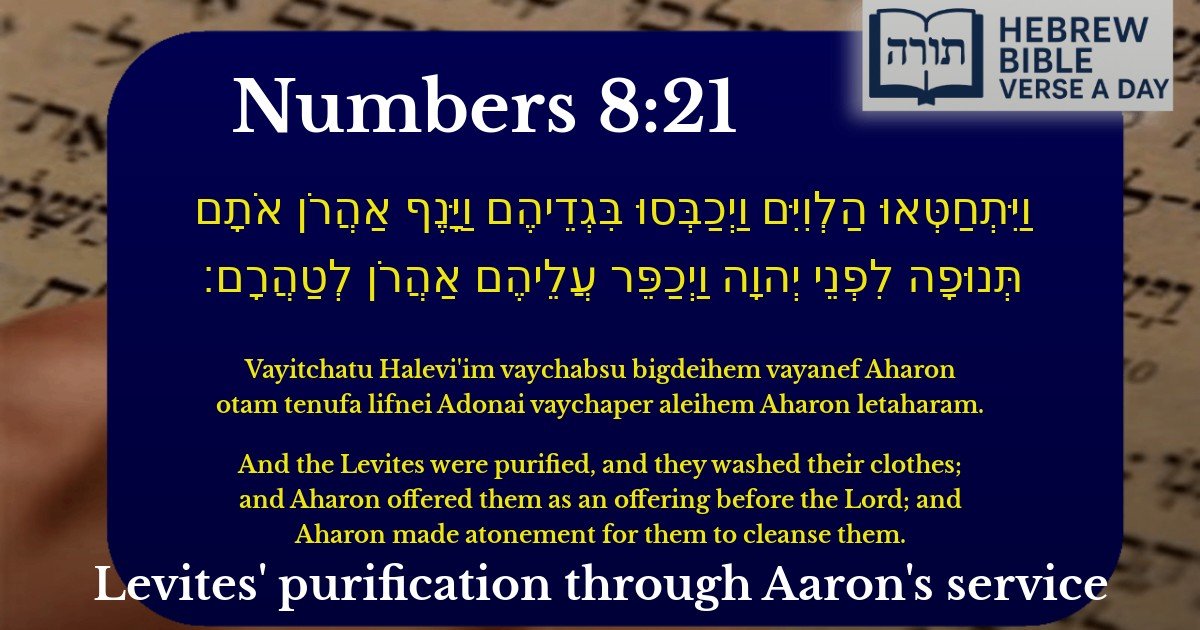

Numbers 8:21 - Levites' purification through Aaron's service

Numbers 8:21 - במדבר 8:21

Hebrew Text

וַיִּתְחַטְּאוּ הַלְוִיִּם וַיְכַבְּסוּ בִּגְדֵיהֶם וַיָּנֶף אַהֲרֹן אֹתָם תְּנוּפָה לִפְנֵי יְהוָה וַיְכַפֵּר עֲלֵיהֶם אַהֲרֹן לְטַהֲרָם׃

English Translation

And the Levites were purified, and they washed their clothes; and Aharon offered them as an offering before the Lord; and Aharon made atonement for them to cleanse them.

Transliteration

Vayitchatu Halevi'im vaychabsu bigdeihem vayanef Aharon otam tenufa lifnei Adonai vaychaper aleihem Aharon letaharam.

Hebrew Leining Text

וַיִּֽתְחַטְּא֣וּ הַלְוִיִּ֗ם וַֽיְכַבְּסוּ֙ בִּגְדֵיהֶ֔ם וַיָּ֨נֶף אַהֲרֹ֥ן אֹתָ֛ם תְּנוּפָ֖ה לִפְנֵ֣י יְהֹוָ֑ה וַיְכַפֵּ֧ר עֲלֵיהֶ֛ם אַהֲרֹ֖ן לְטַהֲרָֽם׃

🎵 Listen to leining

Parasha Commentary

Purification of the Levites

The verse describes the process of purification for the Levites before their service in the Mishkan (Tabernacle). According to Rashi (Bamidbar 8:21), the purification involved three steps:

  • וַיִּתְחַטְּאוּ ("they were purified") – This refers to sprinkling the waters of purification (מי חטאת) upon them, as required for ritual purification.
  • וַיְכַבְּסוּ בִּגְדֵיהֶם ("they washed their clothes") – Symbolizing the removal of spiritual impurity, as clothing represents external influences (Rambam, Hilchot Klei HaMikdash 3:12).
  • וַיָּנֶף אַהֲרֹן אֹתָם תְּנוּפָה ("Aharon offered them as a wave-offering") – This act elevated the Levites as a consecrated offering to Hashem (Sifrei Bamidbar 67).

The Role of Aharon as Kohen Gadol

Aharon’s involvement highlights the Kohen Gadol’s role in facilitating atonement. The תְּנוּפָה (wave-offering) signifies dedication, as the Levites were now set apart for divine service (Malbim, Bamidbar 8:11). The phrase וַיְכַפֵּר עֲלֵיהֶם ("he made atonement for them") indicates that this process removed any barriers preventing their full sanctification (Talmud Yoma 5b).

Spiritual Significance of the Purification

The Midrash (Bamidbar Rabbah 8:5) teaches that the Levites’ purification parallels the spiritual preparation required for all who serve Hashem. Just as they needed physical and ritual cleansing, so too must one purify their actions and intentions when engaging in divine service. The Ramban (Bamidbar 8:19) adds that this process ensured the Levites were spiritually fit to assist the Kohanim in their sacred duties.

📚 Talmud Citations

This verse is not quoted in the Talmud.

Frequently Asked Questions

Q: What does it mean that the Levites were purified in Numbers 8:21?
A: According to Rashi, the purification process for the Levites involved sprinkling the waters of purification (מי חטאת) on them, similar to how the Israelites were purified after contact with impurity. This symbolized their spiritual cleansing before serving in the Mishkan (Tabernacle).
Q: Why did the Levites wash their clothes in this verse?
A: The Rambam explains in Hilchot Klei HaMikdash that washing their garments was part of the purification process, as physical cleanliness reflects spiritual purity. This was a necessary step before they could begin their sacred service to Hashem.
Q: What is the significance of Aharon waving the Levites as an offering?
A: The Talmud (Menachot 61b) teaches that this 'waving' (tenufah) ceremony symbolized dedicating the Levites to Hashem's service, just as offerings were waved to signify being given to G-d. It showed that the Levites were now set apart for holy work.
Q: How does Aharon making atonement for the Levites apply to us today?
A: While we no longer have the Temple service, the Midrash teaches that this teaches the importance of spiritual preparation before serving Hashem. Just as the Levites needed purification, we too must prepare ourselves properly before prayer or Torah study.
Q: Why were the Levites given special purification if they weren't Kohanim?
A: The Sforno explains that although the Levites didn't perform the same services as Kohanim, they still needed purification because they assisted with transporting and guarding the Mishkan. Their holy responsibilities required them to be in a state of ritual purity.