

Join Our Newsletter To Be Informed When New Videos Are Posted
Hebrew Text
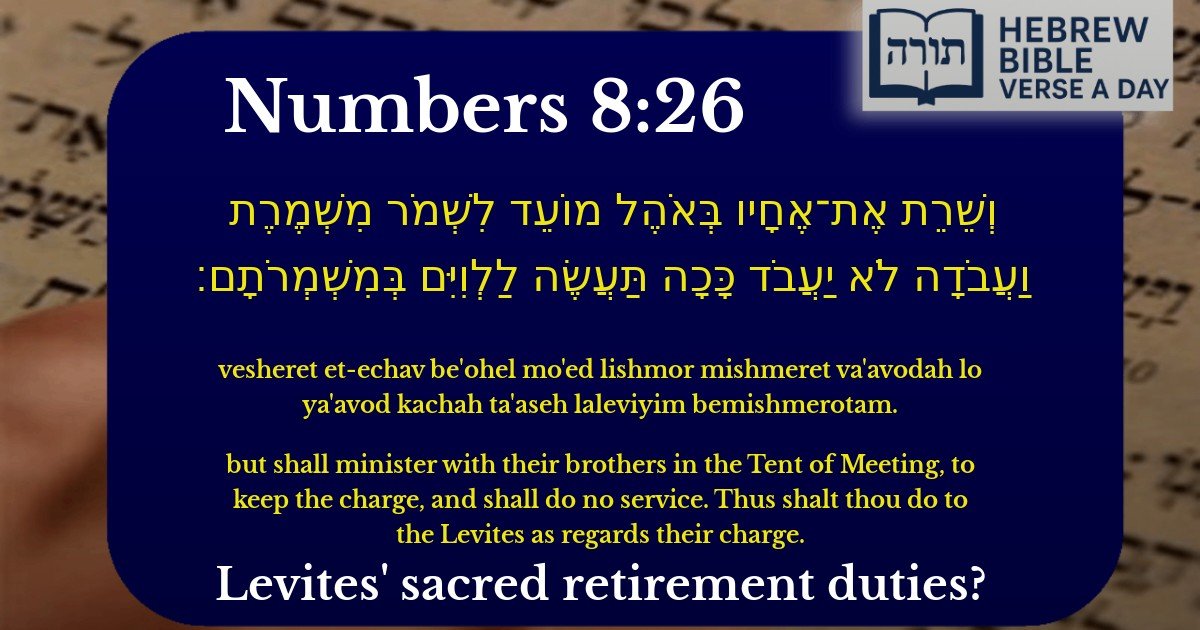
וְשֵׁרֵת אֶת־אֶחָיו בְּאֹהֶל מוֹעֵד לִשְׁמֹר מִשְׁמֶרֶת וַעֲבֹדָה לֹא יַעֲבֹד כָּכָה תַּעֲשֶׂה לַלְוִיִּם בְּמִשְׁמְרֹתָם׃
English Translation
but shall minister with their brothers in the Tent of Meeting, to keep the charge, and shall do no service. Thus shalt thou do to the Levites as regards their charge.
Transliteration
Vesheret et-echav be'ohel mo'ed lishmor mishmeret va'avodah lo ya'avod kachah ta'aseh laleviyim bemishmerotam.
Hebrew Leining Text
וְשֵׁרֵ֨ת אֶת־אֶחָ֜יו בְּאֹ֤הֶל מוֹעֵד֙ לִשְׁמֹ֣ר מִשְׁמֶ֔רֶת וַעֲבֹדָ֖ה לֹ֣א יַעֲבֹ֑ד כָּ֛כָה תַּעֲשֶׂ֥ה לַלְוִיִּ֖ם בְּמִשְׁמְרֹתָֽם׃ {פ}
🎵 Listen to leining
Parasha Commentary
📚 Talmud Citations
This verse is not quoted in the Talmud.
Context in the Torah
The verse (Bamidbar 8:26) discusses the role of the Levites after their formal service begins at age 25 and continues until age 50. This passage outlines their duties in the Mishkan (Tabernacle) and later in the Beit HaMikdash (Temple).
Rashi's Commentary
Rashi explains that the phrase "וְשֵׁרֵת אֶת־אֶחָיו" ("shall minister with their brothers") refers to the Levites assisting the Kohanim (priests) in guarding the Mishkan and performing auxiliary tasks. The term "לִשְׁמֹר מִשְׁמֶרֶת" ("to keep the charge") indicates their responsibility to guard the sanctity of the Mishkan, while "וַעֲבֹדָה לֹא יַעֲבֹד" ("shall do no service") specifies that they are not to perform the actual sacrificial service reserved for Kohanim.
Rambam's Interpretation
In Hilchot Klei HaMikdash 3:2, Rambam elaborates that the Levites' primary roles included:
Talmudic Insights
The Talmud (Arachin 11b) discusses how this verse establishes the age parameters for Levitical service. From age 25-30 they trained ("לִשְׁמֹר מִשְׁמֶרֶת"), and from 30-50 they actively served ("וְשֵׁרֵת"). The Talmud emphasizes that their guarding role was considered an honor and sacred trust.
Midrashic Perspective
The Sifrei notes that the phrase "כָּכָה תַּעֲשֶׂה לַלְוִיִּם" ("Thus shalt thou do to the Levites") teaches that these laws apply to all future generations, not just in the wilderness. The Midrash highlights how each group in Israel had distinct roles - Kohanim for sacrifices, Levites for sacred service, and Israel for supporting both.
Halachic Application
Rabbi Ovadia of Bartenura explains that this verse establishes the principle of division of sacred labor. While Kohanim performed the actual Temple service, Levites had the equally important role of maintaining the sanctity and order of the holy space, showing that all roles in divine service are valuable when performed with proper intent.