
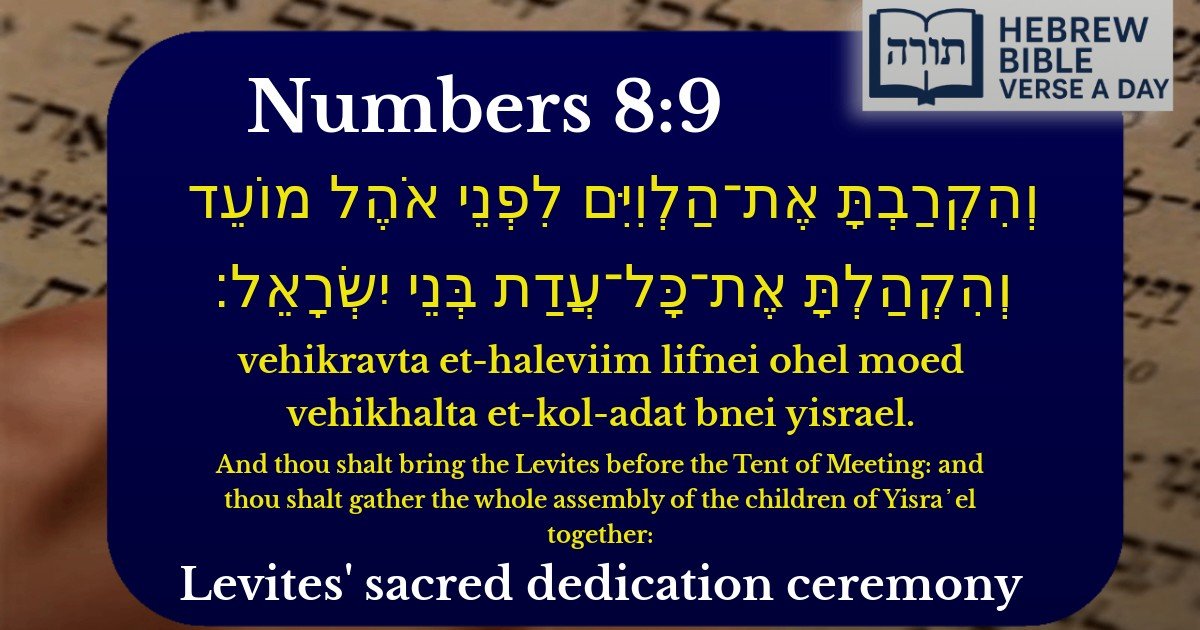

Numbers 8:9 - Levites' sacred dedication ceremony

Numbers 8:9 - במדבר 8:9

Hebrew Text

וְהִקְרַבְתָּ אֶת־הַלְוִיִּם לִפְנֵי אֹהֶל מוֹעֵד וְהִקְהַלְתָּ אֶת־כָּל־עֲדַת בְּנֵי יִשְׂרָאֵל׃

English Translation

And thou shalt bring the Levites before the Tent of Meeting: and thou shalt gather the whole assembly of the children of Yisra᾽el together:

Transliteration

Vehikravta et-haleviim lifnei ohel moed vehikhalta et-kol-adat bnei yisrael.

Hebrew Leining Text

וְהִקְרַבְתָּ֙ אֶת־הַלְוִיִּ֔ם לִפְנֵ֖י אֹ֣הֶל מוֹעֵ֑ד וְהִ֨קְהַלְתָּ֔ אֶֽת־כׇּל־עֲדַ֖ת בְּנֵ֥י יִשְׂרָאֵֽל׃

🎵 Listen to leining

Parasha Commentary

Context of the Verse

The verse (Bamidbar 8:9) describes the process of consecrating the Levites for their sacred service in the Mishkan (Tabernacle). This follows Hashem's command to separate the Levites from the rest of Bnei Yisrael for their unique role in avodat hakodesh (holy service).

Rashi's Explanation

Rashi explains that the phrase "וְהִקְרַבְתָּ אֶת־הַלְוִיִּם" ("And thou shalt bring the Levites") refers to physically presenting the Levites before the Ohel Moed as an offering. This parallels the korbanot (sacrifices), where animals were brought near for sanctification. The Levites themselves become a type of "korban" dedicated to divine service.

Purpose of Gathering All of Israel

The second part of the verse, "וְהִקְהַלְתָּ אֶת־כָּל־עֲדַת בְּנֵי יִשְׂרָאֵל" ("and thou shalt gather the whole assembly"), teaches that the entire nation must witness this consecration. The Ramban explains that this public ceremony:

  • Demonstrates the Levites' special status as replacements for the firstborns (who originally were meant to serve)
  • Gives communal recognition to their new sacred role
  • Strengthens the bond between the Levites and the rest of Israel

Symbolism in the Midrash

The Midrash Tanchuma connects this verse to the broader theme of kedushah (holiness) in the Israelite camp. Just as the Mishkan stood at the center, with the tribes arranged around it, the Levites' consecration at the Ohel Moed represents:

  • The centrality of divine service in national life
  • The idea that spiritual elevation requires both separation (of the Levites) and communal participation (of all Israel)

Practical Halachic Implications

The Talmud (Arachin 11a) derives from this verse that the Levites' service requires proper semichah (laying of hands) and public declaration, similar to other consecration rituals. This establishes important principles for:

  • The transmission of sacred roles
  • The need for communal involvement in religious appointments
  • The concept that spiritual leadership must be openly recognized

📚 Talmud Citations

This verse is quoted in the Talmud.

📖 Arakhin 11a
The verse is referenced in the discussion about the sanctity and duties of the Levites in the Temple service.
📖 Sotah 37b
The verse is cited in the context of the assembly of the Israelites and the role of the Levites in the communal offerings.

Frequently Asked Questions

Q: What does Numbers 8:9 mean?
A: Numbers 8:9 describes the process of dedicating the Levites for their service in the Mishkan (Tabernacle). The verse instructs Moshe (Moses) to bring the Levites before the Tent of Meeting and gather all of Bnei Yisrael (the Children of Israel) to witness this special ceremony. According to Rashi, this public gathering emphasized the Levites' unique role as substitutes for the firstborns in serving Hashem.
Q: Why were the Levites brought before the Tent of Meeting?
A: The Levites were brought before the Tent of Meeting as part of their inauguration for divine service. The Rambam explains in Hilchot Klei HaMikdash that this ceremony marked their transition from regular Israelites to holy servants of Hashem, replacing the firstborns who originally had this role. The public gathering showed that their appointment was with the consent and awareness of all Israel.
Q: What can we learn from Numbers 8:9 today?
A: From this verse, we learn the importance of public recognition when assigning sacred roles. The Talmud (Chullin 92a) derives from here that important religious appointments should be made with community awareness. Today, this teaches us that leadership positions in Jewish life should be established transparently and with communal participation.
Q: Why was the entire assembly gathered for the Levites' dedication?
A: The Midrash Tanchuma explains that gathering all of Israel served two purposes: 1) To show that the Levites were being taken in place of the firstborns from all tribes (after the incident of the Golden Calf), and 2) To demonstrate that their service was on behalf of the entire nation. This public ceremony gave legitimacy to their special status.
Q: How does the Levites' dedication apply to us today?
A: While we no longer have the Temple service, the principle remains that certain individuals dedicate themselves to communal spiritual service. The Rambam (Mishneh Torah) notes that just as the Levites were set apart, today's Torah scholars and community leaders carry on this tradition of devoting themselves to Torah study and teaching for the benefit of all Israel.