

Join Our Newsletter To Be Informed When New Videos Are Posted
Hebrew Text
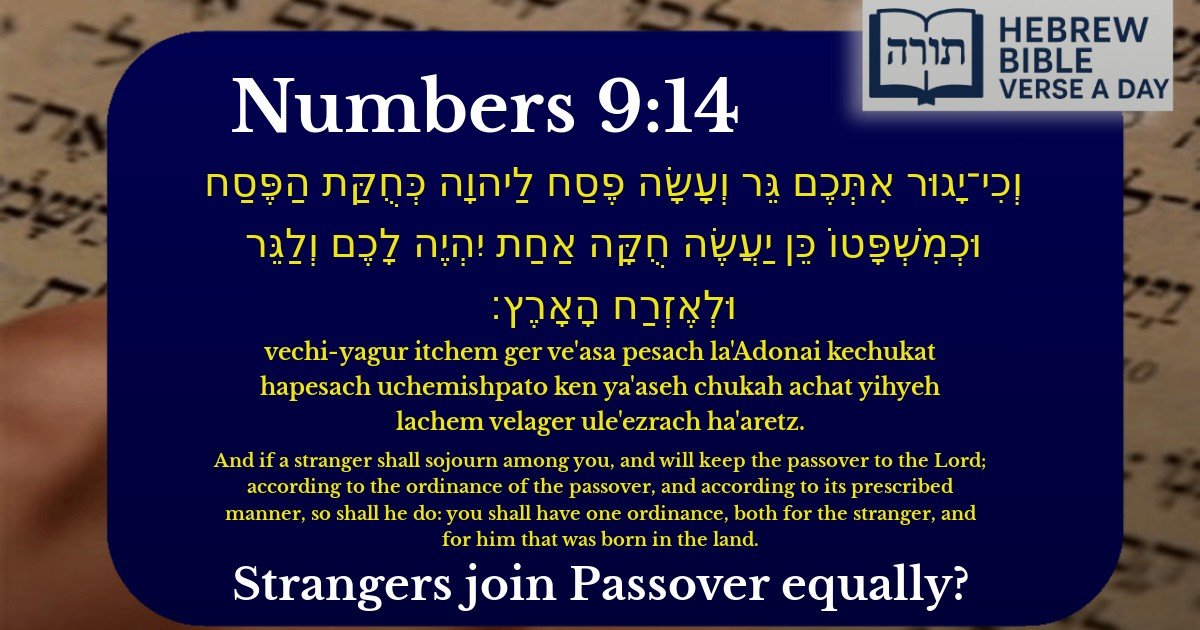
וְכִי־יָגוּר אִתְּכֶם גֵּר וְעָשָׂה פֶסַח לַיהוָה כְּחֻקַּת הַפֶּסַח וּכְמִשְׁפָּטוֹ כֵּן יַעֲשֶׂה חֻקָּה אַחַת יִהְיֶה לָכֶם וְלַגֵּר וּלְאֶזְרַח הָאָרֶץ׃
English Translation
And if a stranger shall sojourn among you, and will keep the passover to the Lord; according to the ordinance of the passover, and according to its prescribed manner, so shall he do: you shall have one ordinance, both for the stranger, and for him that was born in the land.
Transliteration
Vechi-yagur itchem ger ve'asa pesach la'Adonai kechukat hapesach uchemishpato ken ya'aseh chukah achat yihyeh lachem velager ule'ezrach ha'aretz.
Hebrew Leining Text
וְכִֽי־יָג֨וּר אִתְּכֶ֜ם גֵּ֗ר וְעָ֤שָֽׂה פֶ֙סַח֙ לַֽיהֹוָ֔ה כְּחֻקַּ֥ת הַפֶּ֛סַח וּכְמִשְׁפָּט֖וֹ כֵּ֣ן יַעֲשֶׂ֑ה חֻקָּ֤ה אַחַת֙ יִהְיֶ֣ה לָכֶ֔ם וְלַגֵּ֖ר וּלְאֶזְרַ֥ח הָאָֽרֶץ׃ {ס}
🎵 Listen to leining
Parasha Commentary
📚 Talmud Citations
This verse is quoted in the Talmud.
📖 Pesachim 96a
The verse is discussed in the context of the laws pertaining to the Passover sacrifice, particularly regarding the inclusion of strangers (gerim) in the observance of Passover.
The Inclusion of the Ger in Pesach Observance
The verse (Bamidbar 9:14) establishes a fundamental principle regarding the participation of a ger (stranger/convert) in the Korban Pesach (Paschal sacrifice). The Torah emphasizes equality in mitzvah observance between native-born Israelites and converts, stating "חֻקָּה אַחַת יִהְיֶה לָכֶם וְלַגֵּר" ("one law shall be for you and for the stranger").
Rashi's Explanation
Rashi clarifies that this refers specifically to a ger tzedek (righteous convert) who has undergone full conversion, including circumcision. He notes that the phrase "וְכִי־יָגוּר אִתְּכֶם גֵּר" ("if a stranger shall sojourn among you") implies the convert has joined the Jewish people completely, not merely residing among them.
Halachic Requirements for Gerim
The Rambam (Hilchot Korban Pesach 9:1) derives from this verse several key halachot:
Spiritual Significance
The Sforno explains that this equality reflects the essence of Pesach as commemorating our national birth as a people. Just as the Exodus created the Jewish nation, a convert's acceptance represents a spiritual rebirth into that same nation. The Mechilta notes this parallels the original Pesach in Egypt, where righteous converts from other nations joined Israel in the Exodus.
Practical Implications
Tosafot (Pesachim 96a) discusses how this principle extends beyond Pesach to other mitzvot, establishing the convert's equal status in Jewish law. The Talmud (Keritot 9a) derives from here that a convert brings a korban like other Jews when the Temple stands.