

Join Our Newsletter To Be Informed When New Videos Are Posted
Hebrew Text
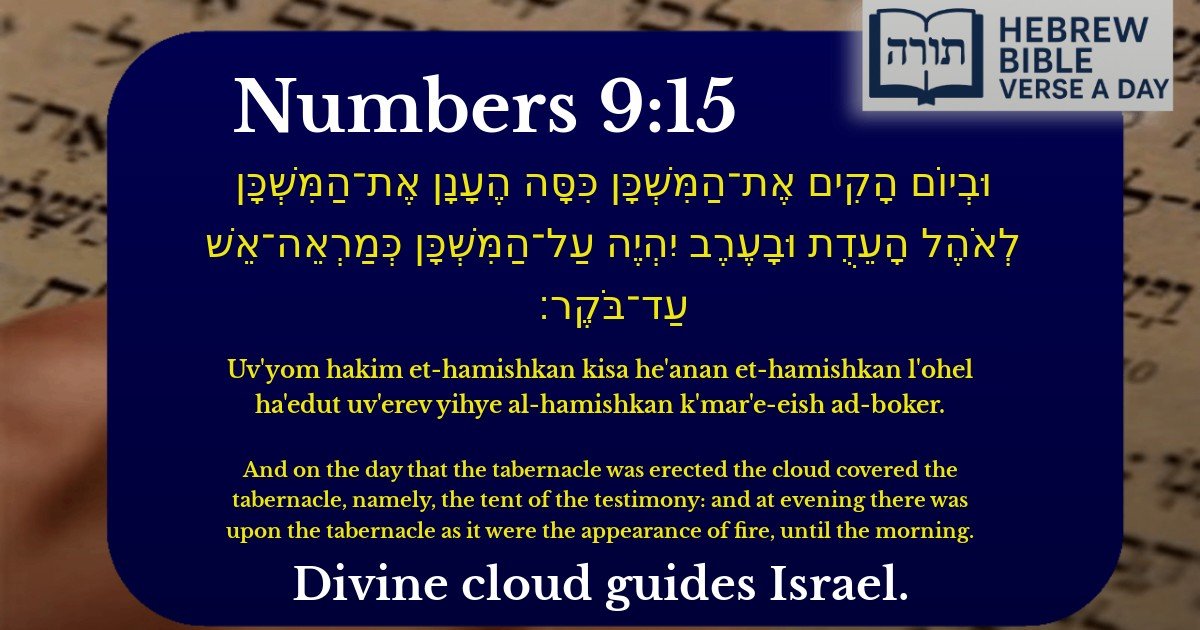
וּבְיוֹם הָקִים אֶת־הַמִּשְׁכָּן כִּסָּה הֶעָנָן אֶת־הַמִּשְׁכָּן לְאֹהֶל הָעֵדֻת וּבָעֶרֶב יִהְיֶה עַל־הַמִּשְׁכָּן כְּמַרְאֵה־אֵשׁ עַד־בֹּקֶר׃
English Translation
And on the day that the tabernacle was erected the cloud covered the tabernacle, namely, the tent of the testimony: and at evening there was upon the tabernacle as it were the appearance of fire, until the morning.
Transliteration
Uv'yom hakim et-hamishkan kisa he'anan et-hamishkan l'ohel ha'edut uv'erev yihye al-hamishkan k'mar'e-eish ad-boker.
Hebrew Leining Text
וּבְיוֹם֙ הָקִ֣ים אֶת־הַמִּשְׁכָּ֔ן כִּסָּ֤ה הֶֽעָנָן֙ אֶת־הַמִּשְׁכָּ֔ן לְאֹ֖הֶל הָעֵדֻ֑ת וּבָעֶ֜רֶב יִהְיֶ֧ה עַֽל־הַמִּשְׁכָּ֛ן כְּמַרְאֵה־אֵ֖שׁ עַד־בֹּֽקֶר׃
🎵 Listen to leining
Parasha Commentary
📚 Talmud Citations
This verse is quoted in the Talmud.
📖 Yoma 54a
The verse is referenced in a discussion about the cloud and fire that covered the Tabernacle, symbolizing God's presence among the Israelites.
📖 Sukkah 5a
The verse is cited in a discussion about the dimensions and the divine presence in the Tabernacle, emphasizing the miraculous nature of the cloud and fire.
The Cloud and Fire Over the Mishkan
The verse describes the divine presence manifesting over the Mishkan (Tabernacle) in two forms: a cloud by day and a fire by night. This phenomenon symbolized Hashem's constant protection and guidance of Bnei Yisrael (the Children of Israel) during their travels in the wilderness.
Rashi's Explanation
Rashi (Bamidbar 9:15) explains that the cloud served three primary purposes:
The Significance of the Fire
The Ramban (Bamidbar 9:15) notes that the nighttime appearance of fire demonstrated that Hashem's presence never departed from the Mishkan. The fire was visible to all the surrounding nations, serving as testimony to Hashem's relationship with Israel (hence "Ohel Ha'edut" - Tent of Testimony).
Midrashic Insights
The Midrash Tanchuma (Bamidbar 5) compares the cloud and fire to a loving parent's care for a child - shading from the sun by day and providing warmth and light by night. This reflects Hashem's constant, multifaceted care for His people.
Halachic Implications
The Talmud (Shabbat 23a) derives from this verse that we light Shabbat and Chanukah candles to recall the divine light that rested upon the Mishkan. The Rambam (Hilchot Beit HaBechira 6:16) also cites this as proof that the Shechinah's presence was visibly manifest in the Mishkan.