

Join Our Newsletter To Be Informed When New Videos Are Posted
Hebrew Text
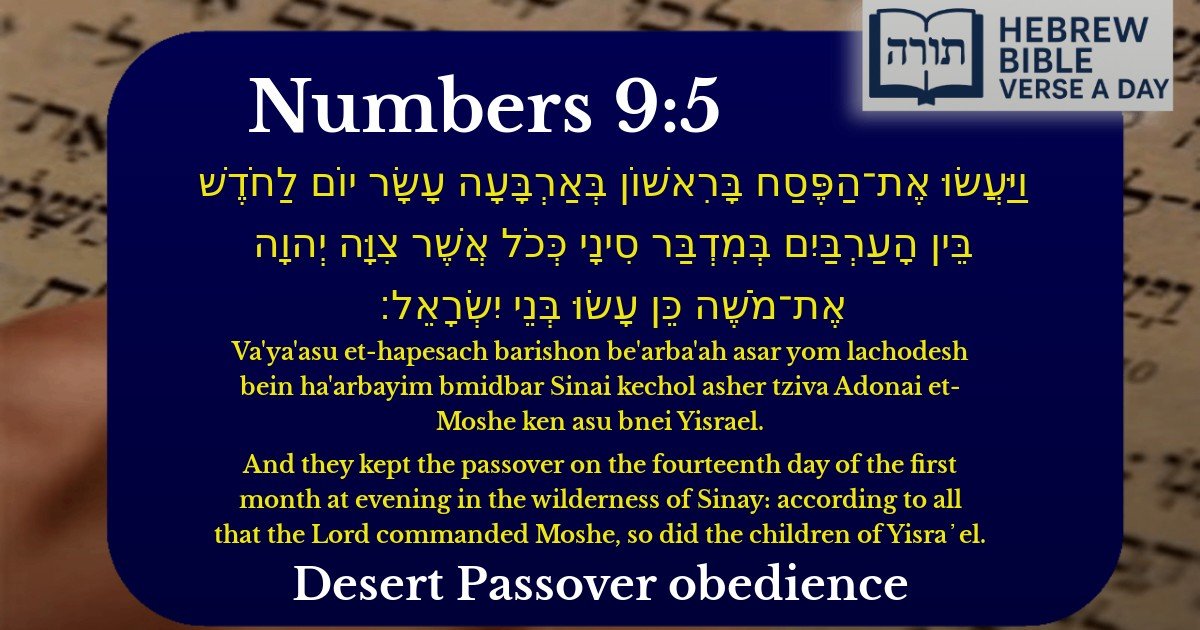
וַיַּעֲשׂוּ אֶת־הַפֶּסַח בָּרִאשׁוֹן בְּאַרְבָּעָה עָשָׂר יוֹם לַחֹדֶשׁ בֵּין הָעַרְבַּיִם בְּמִדְבַּר סִינָי כְּכֹל אֲשֶׁר צִוָּה יְהוָה אֶת־מֹשֶׁה כֵּן עָשׂוּ בְּנֵי יִשְׂרָאֵל׃
English Translation
And they kept the passover on the fourteenth day of the first month at evening in the wilderness of Sinay: according to all that the Lord commanded Moshe, so did the children of Yisra᾽el.
Transliteration
Va'ya'asu et-hapesach barishon be'arba'ah asar yom lachodesh bein ha'arbayim bmidbar Sinai kechol asher tziva Adonai et-Moshe ken asu bnei Yisrael.
Hebrew Leining Text
וַיַּעֲשׂ֣וּ אֶת־הַפֶּ֡סַח בָּרִאשׁ֡וֹן בְּאַרְבָּעָה֩ עָשָׂ֨ר י֥וֹם לַחֹ֛דֶשׁ בֵּ֥ין הָעַרְבַּ֖יִם בְּמִדְבַּ֣ר סִינָ֑י כְּ֠כֹ֠ל אֲשֶׁ֨ר צִוָּ֤ה יְהֹוָה֙ אֶת־מֹשֶׁ֔ה כֵּ֥ן עָשׂ֖וּ בְּנֵ֥י יִשְׂרָאֵֽל׃
🎵 Listen to leining
Parasha Commentary
📚 Talmud Citations
This verse is quoted in the Talmud.
📖 Pesachim 66a
The verse is referenced in a discussion about the timing and observance of Passover, particularly in relation to the commandment given to Moses and its fulfillment by the Israelites in the wilderness.
📖 Sotah 36b
The verse is mentioned in the context of discussing the Israelites' adherence to divine commandments during their time in the wilderness, highlighting their obedience in observing Passover.
The Pesach Offering in the Wilderness
The verse (Bamidbar 9:5) describes Bnei Yisrael observing the Korban Pesach in the Midbar Sinai exactly one year after Yetziat Mitzrayim. Rashi explains that this was the only Pesach offering brought during the 40 years in the wilderness, as the Torah later states (Bamidbar 9:6-14) that those who were tamei or distant would observe Pesach Sheni instead.
Significance of the Location
The Sforno notes that performing the mitzvah "in the wilderness of Sinai" highlights the nation's complete devotion to Hashem's commandments even in harsh desert conditions. The Ramban adds that this demonstrated their willingness to follow divine instructions regardless of physical circumstances.
Precision in Fulfillment
The phrase "כְּכֹל אֲשֶׁר צִוָּה ה' אֶת־מֹשֶׁה" (according to all that Hashem commanded Moshe) is emphasized by the Talmud (Pesachim 96a) to show that Bnei Yisrael performed every detail exactly as instructed, including:
Themes of Divine Service
The Midrash Tanchuma connects this verse to the broader theme of kabbalat ol malchut shamayim (accepting the yoke of heaven). By meticulously observing the Pesach mitzvah in the wilderness, Bnei Yisrael demonstrated their complete acceptance of Torah authority, preparing them for the upcoming revelation at Har Sinai.
Chronological Context
Ibn Ezra points out that this event occurred just one month after the completion of the Mishkan (as the preceding chapters describe its construction), showing how the people immediately applied the newly given laws of korbanot to actual practice.