

Join Our Newsletter To Be Informed When New Videos Are Posted
Hebrew Text
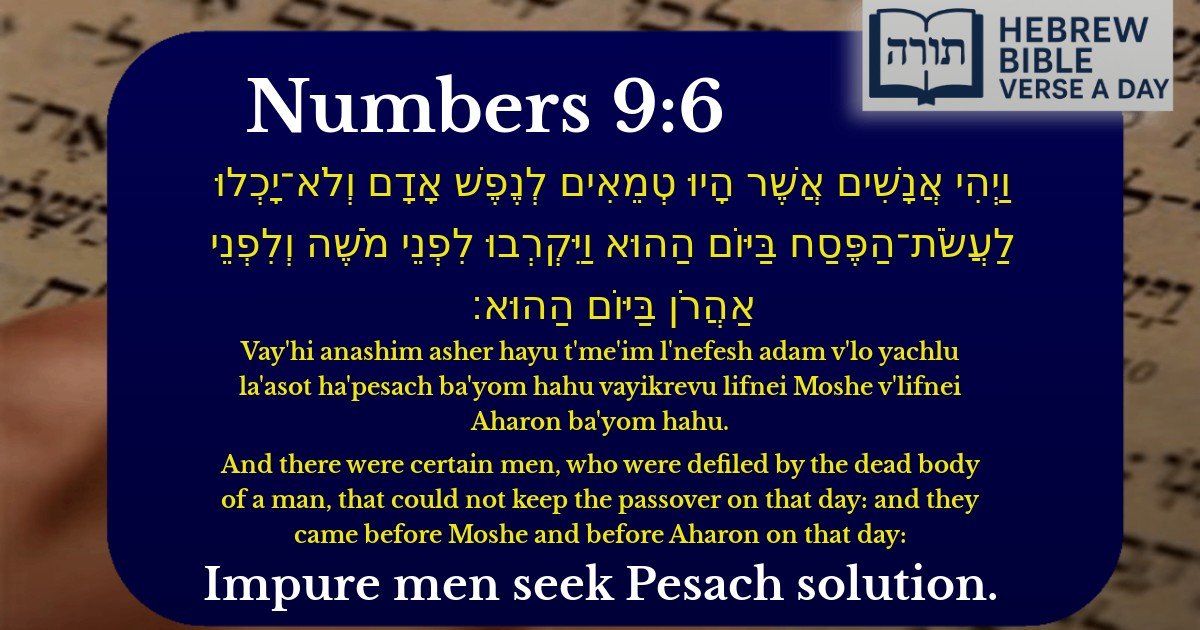
וַיְהִי אֲנָשִׁים אֲשֶׁר הָיוּ טְמֵאִים לְנֶפֶשׁ אָדָם וְלֹא־יָכְלוּ לַעֲשֹׂת־הַפֶּסַח בַּיּוֹם הַהוּא וַיִּקְרְבוּ לִפְנֵי מֹשֶׁה וְלִפְנֵי אַהֲרֹן בַּיּוֹם הַהוּא׃
English Translation
And there were certain men, who were defiled by the dead body of a man, that could not keep the passover on that day: and they came before Moshe and before Aharon on that day:
Transliteration
Vay'hi anashim asher hayu t'me'im l'nefesh adam v'lo yachlu la'asot ha'pesach ba'yom hahu vayikrevu lifnei Moshe v'lifnei Aharon ba'yom hahu.
Hebrew Leining Text
וַיְהִ֣י אֲנָשִׁ֗ים אֲשֶׁ֨ר הָי֤וּ טְמֵאִים֙ לְנֶ֣פֶשׁ אָדָ֔ם וְלֹא־יָכְל֥וּ לַעֲשֹׂת־הַפֶּ֖סַח בַּיּ֣וֹם הַה֑וּא וַֽיִּקְרְב֞וּ לִפְנֵ֥י מֹשֶׁ֛ה וְלִפְנֵ֥י אַהֲרֹ֖ן בַּיּ֥וֹם הַהֽוּא׃
🎵 Listen to leining
Parasha Commentary
📚 Talmud Citations
This verse is quoted in the Talmud.
📖 Pesachim 66a
The verse is discussed in the context of the laws concerning those who are ritually impure and their ability to observe Passover.
📖 Zevachim 101b
The verse is referenced in a discussion about the timing and requirements for offering the Passover sacrifice.
Context of the Verse
This verse (Bamidbar 9:6) describes a situation where certain individuals were unable to bring the Korban Pesach (Paschal offering) at its designated time because they were in a state of tum'ah (ritual impurity) due to contact with a human corpse. They approached Moshe and Aharon to seek guidance, leading to the institution of Pesach Sheni (the "Second Passover") as a remedy for those who missed the original date.
Rashi's Commentary
Rashi explains that these men were involved in the mitzvah of carrying Yosef's bones out of Egypt (as mentioned in Shemot 13:19), which rendered them tamei (ritually impure). Their inability to bring the Korban Pesach was due to the halachic principle that one who is tamei may not partake of sacrificial meat (see Vayikra 7:20). Rashi emphasizes their righteousness—they approached Moshe and Aharon immediately, demonstrating their eagerness to fulfill the mitzvah despite their unavoidable impurity.
Halachic Implications
Midrashic Insights
The Midrash (Bamidbar Rabbah 9:7) highlights the men's sincerity, noting that they could have rationalized their exemption due to their involvement in the mitzvah of burying the dead (a higher-priority mitzvah). Instead, they sought a way to participate in the Korban Pesach, teaching the importance of striving for mitzvot even when obstacles arise.
Moral Lesson
This episode underscores the Torah's compassion in providing a second chance for those with legitimate reasons for missing a mitzvah. It also teaches that one should proactively seek solutions to spiritual challenges, as these men did by approaching Moshe and Aharon rather than passively accepting their exclusion.