

Join Our Newsletter To Be Informed When New Videos Are Posted
Hebrew Text
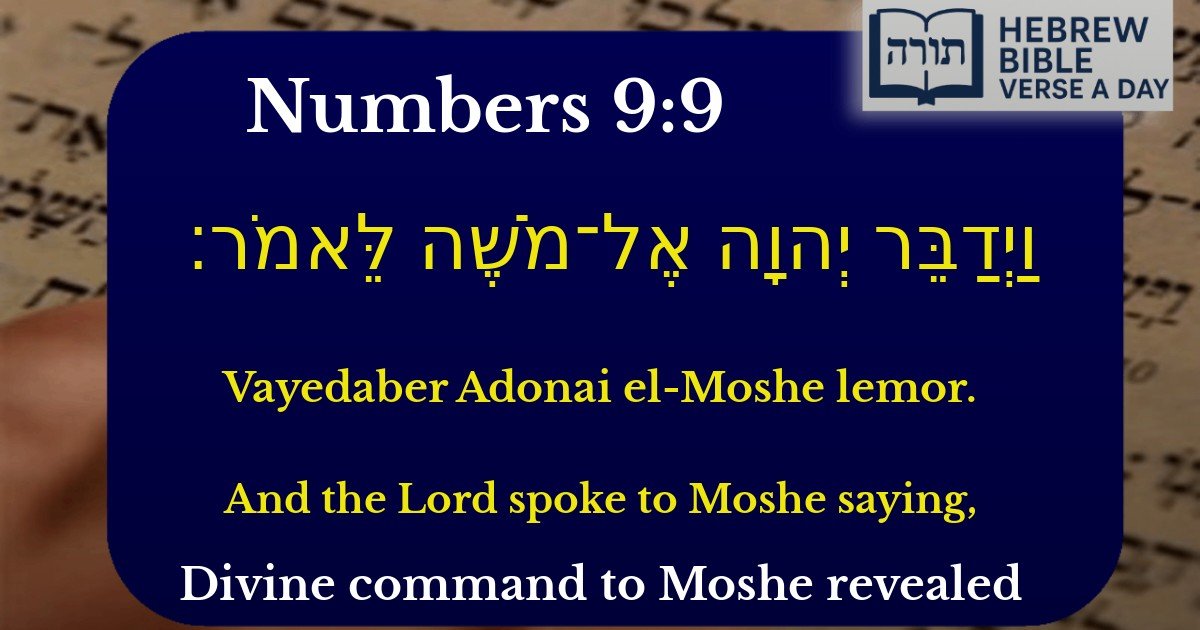
וַיְדַבֵּר יְהוָה אֶל־מֹשֶׁה לֵּאמֹר׃
English Translation
And the Lord spoke to Moshe saying,
Transliteration
Vayedaber Adonai el-Moshe lemor.
Hebrew Leining Text
וַיְדַבֵּ֥ר יְהֹוָ֖ה אֶל־מֹשֶׁ֥ה לֵּאמֹֽר׃
🎵 Listen to leining
Parasha Commentary
📚 Talmud Citations
This verse is not quoted in the Talmud.
Introduction to Divine Communication
The phrase "וַיְדַבֵּר יְהוָה אֶל־מֹשֶׁה לֵּאמֹר" ("And the Lord spoke to Moshe saying") appears frequently in the Torah, marking the transmission of divine commandments and teachings. This formulation emphasizes the direct and authoritative nature of Hashem's communication with Moshe Rabbeinu, the greatest of all prophets.
Rashi's Explanation
Rashi (on Shemot 6:2) notes that the term "וַיְדַבֵּר" ("and He spoke") often indicates a harsh or forceful tone, as opposed to "וַיֹּאמֶר" ("and He said"), which is softer. However, in this context, it signifies the clarity and precision of divine instruction. The phrase "לֵּאמֹר" ("saying") suggests that Moshe was to relay these words to Bnei Yisrael, underscoring his role as the intermediary.
Rambam on Prophecy
In Moreh Nevuchim (2:45), the Rambam explains that Moshe's prophecy was unique—Hashem spoke to him "פֶּה אֶל פֶּה" ("mouth to mouth"), with unparalleled clarity (Bamidbar 12:8). This introductory phrase highlights the divine origin of the commandments and Moshe's singular role in transmitting them without alteration.
Talmudic Insight
The Talmud (Yevamot 49b) teaches that all other prophets received messages through visions or allegories, but Moshe heard Hashem's words "בְּאַסְפַּקְלַרְיָא הַמְּאִירָה" ("through a clear lens"). This verse thus serves as a reminder of the Torah's divine authorship and Moshe's unparalleled prophetic stature.
Midrashic Perspective
The Midrash (Shemot Rabbah 28:6) elaborates that every divine communication to Moshe was preceded by a call ("מֹשֶׁה מֹשֶׁה"), demonstrating Hashem's love and direct relationship with him. The phrase "וַיְדַבֵּר יְהוָה אֶל־מֹשֶׁה" reflects this intimate and ongoing dialogue.
Key Themes